
[Tips for architectural photography explained] I took some photos after moving my office
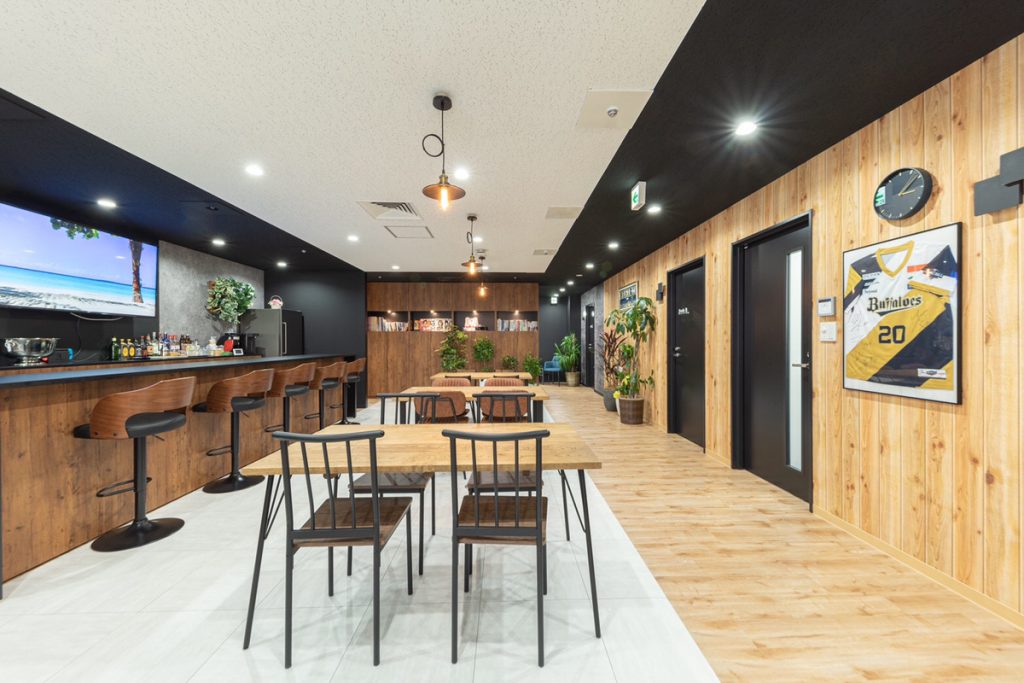
table of contents
- 1 Introducing the Beyond Osaka office with photos!
- 2 Photographer explains! Tips for architectural photography that anyone can follow
- 2.1 What makes a good building? Deciding the direction of the shoot
- 2.2 Tips for Architectural Photography: 1. Shoot with a wide angle
- 2.3 Architectural photography tip #2: Shoot straight
- 2.4 Architectural photography tip #2: Don't include unnecessary things
- 2.5 Architectural photography tip #4: How to look at the light
- 2.6 [Extra Edition] Involving people in creating a story
- 3 summary
Hello. I'm Goto, an in-house photographer who specializes in portraits, food, and architecture.
(I work in the Web Services Division.)
Our company, Beyond, moved to a new office in late April 2021
Press release regarding Osaka office relocation has been published
In fact, we were also involved in an office relocation project, and we were able to design the new office with attention to detail in every detail, from the cafe space (which becomes a bar at night!) to the offices and various booths
With the desire
to have as many people as possible see the office in its best condition I put my skills as a photographer to good use and was in charge of architectural photography of the new office.
My career as a photographer is listed here
An in-house photo studio? A story of how employees created a benefit program
Now, I'd like to share with you some photos I took of each room in the Osaka office, so
please take a look!
explain
some tips and tricks for architectural photography These can be done with a smartphone , so we hope you'll find them useful!
Introducing the Beyond Osaka office with photos!
Below are some photos I took of the Osaka office!
Reception and entrance
Let's start the reception and entrance .
The impression of the reception and entrance, which can be said to be the face of the office, is very important.
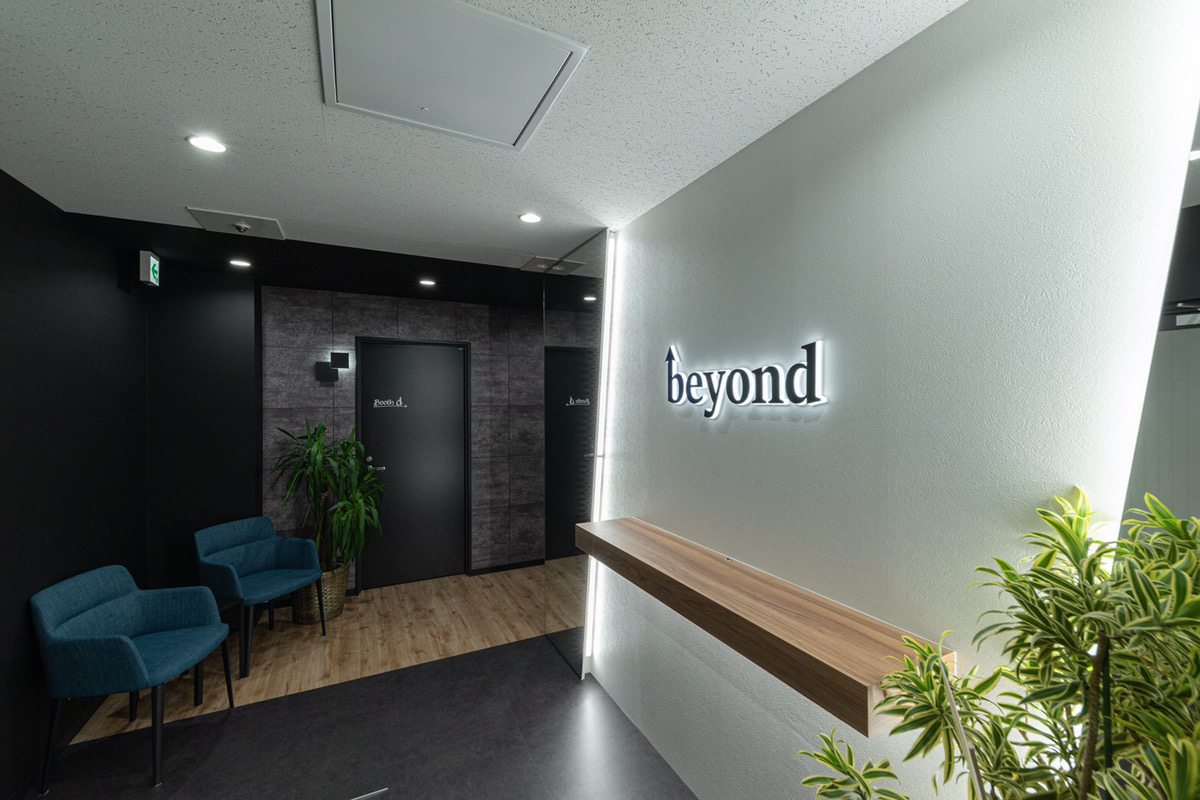 This is the reception and entrance of the Beyond Osaka office.
It has the atmosphere of an IT company. The predominantly black space is enhanced with a large mirror to create depth, and the company logo and chairs express the company's corporate colors.
Common area/cafe (bar) space
Next is the common area, which is designed as a space for employees to take breaks and to greet guests when they wake up
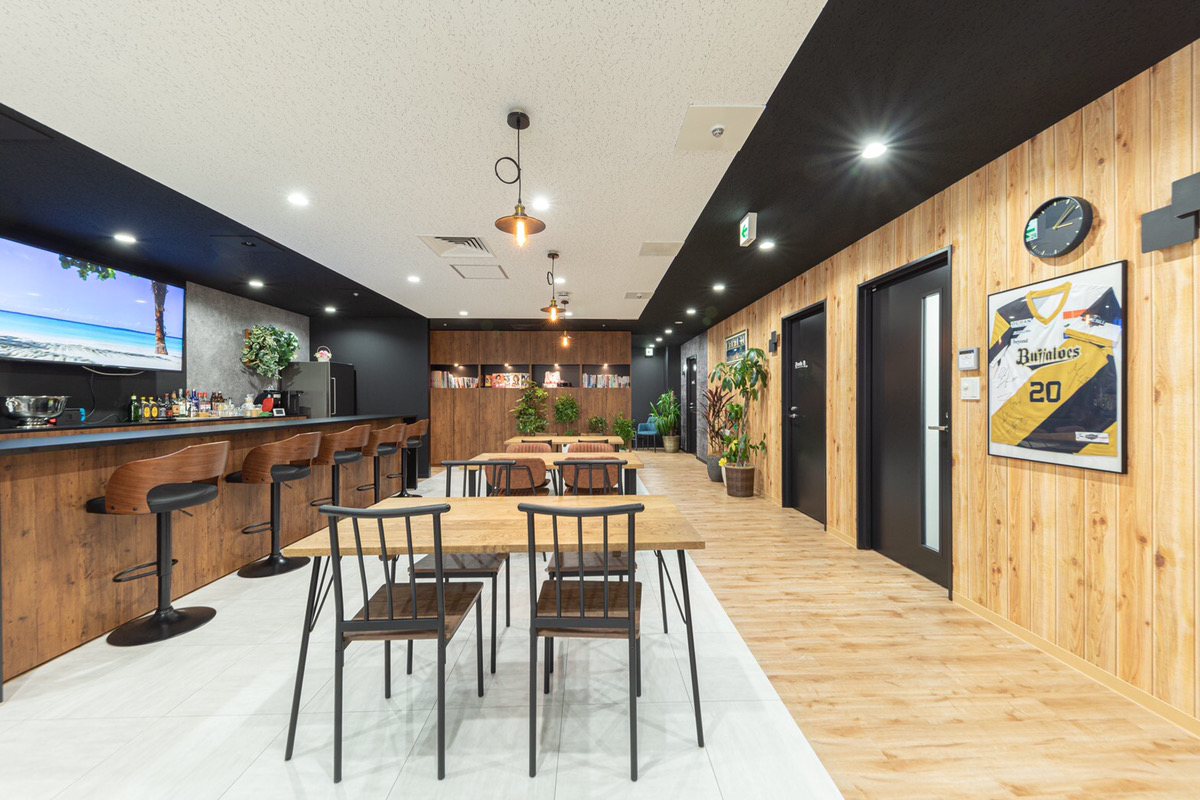
It 's a space that might make you start to wonder, "What is an office?"
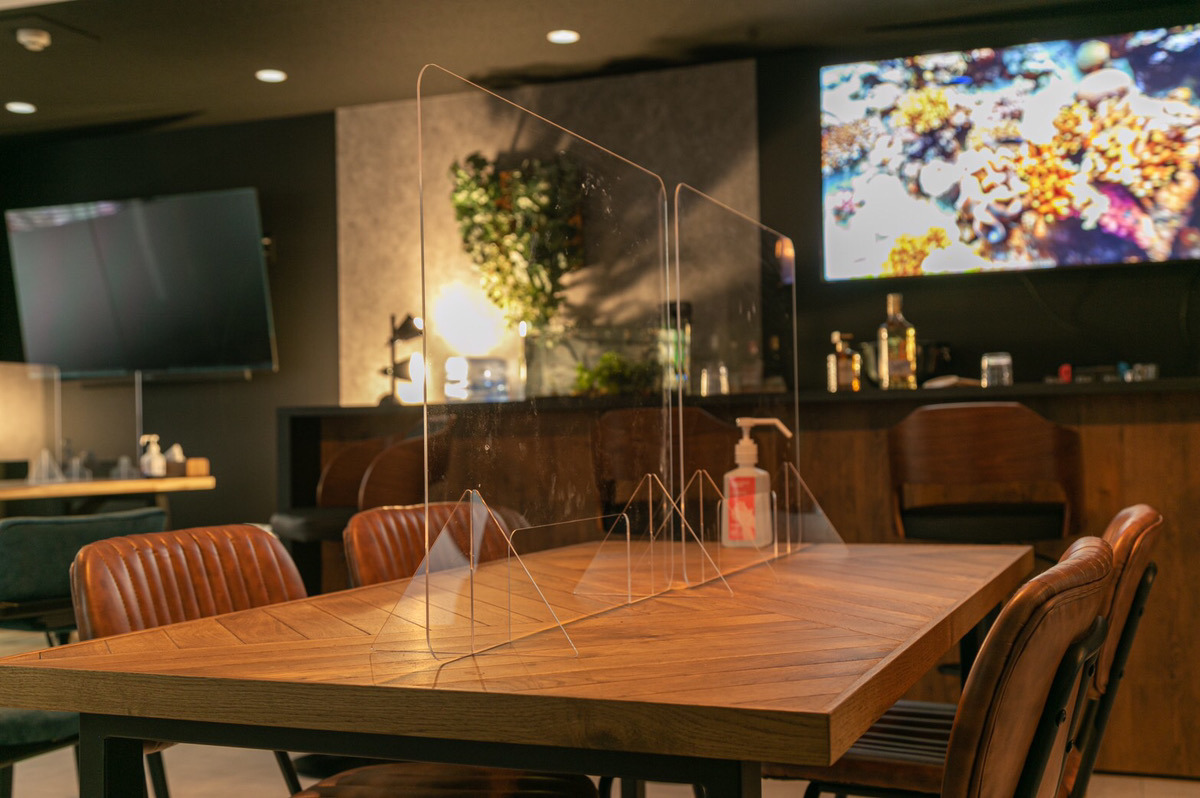
It operates as a cafe during the day and as a bar after 7pm, allowing employees, partners and customers to enjoy time together
partitions have been installed between seats
And here is the bar counter
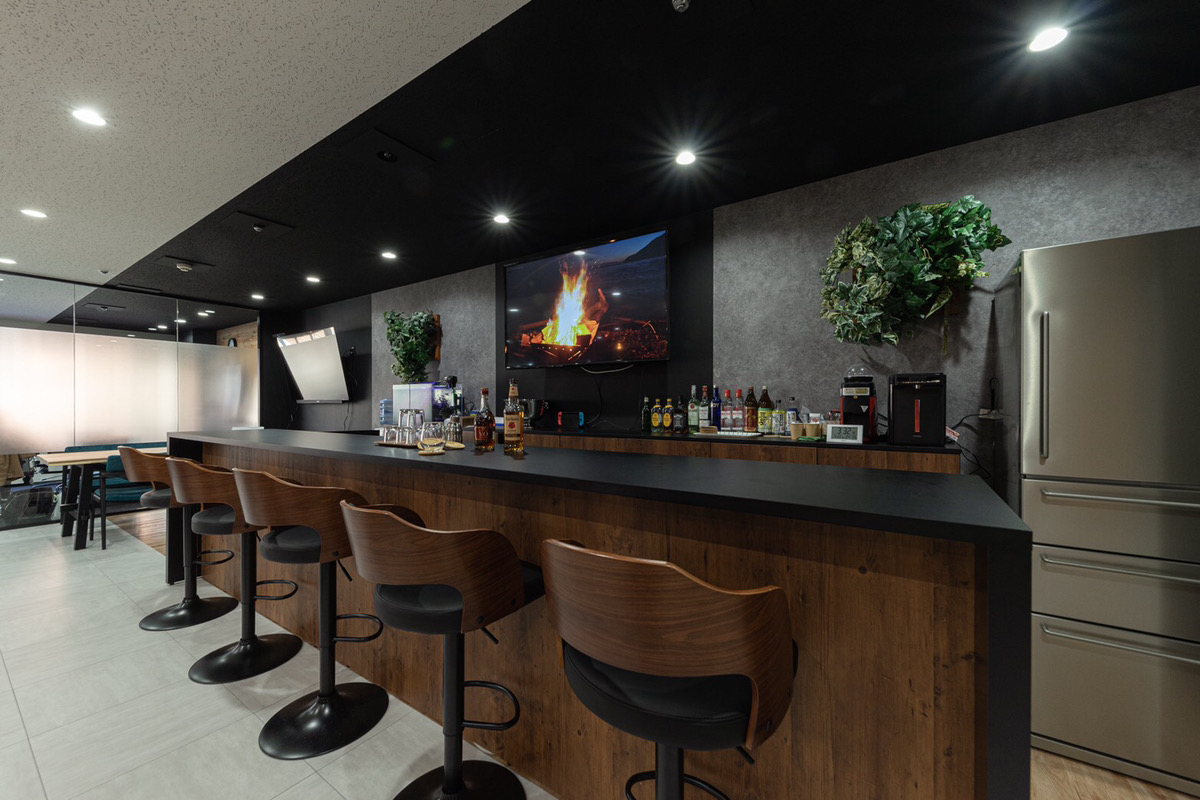
As you can see, there is alcohol behind the counter!
At Beyond, members who finish work after 7pm can drink alcohol here.
By the way, at Beyond, an employee who is good at making alcohol works as an in-house bartender as a side job.

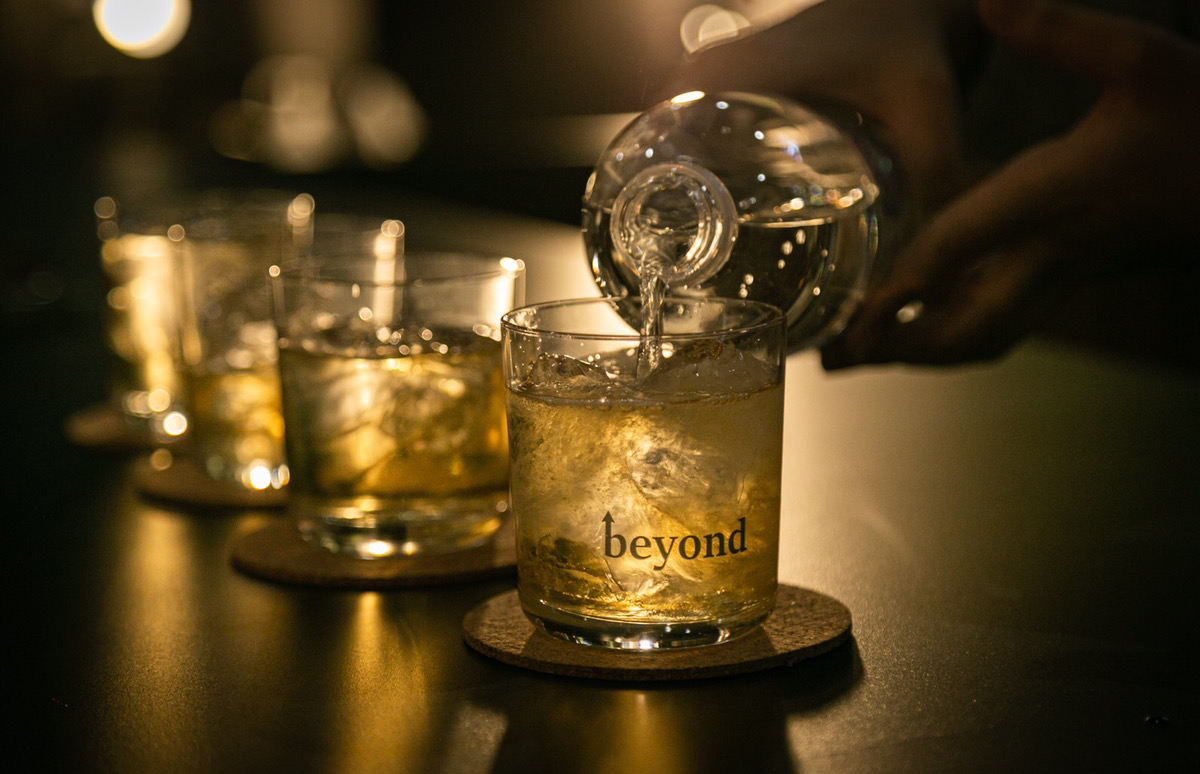
Drinking alcohol from Beyond Glass is delicious. (Company spirit)
Now, with all the information up to this point, you might be wondering,
"How is this an office?" So, next we will introduce the offices and various booths.
office
The office a free address system (no fixed seat for each member), so we can work in a different place every day.
It's a nice change of pace and quite fun.
Due to security reasons, we cannot show you everything, but this window space is particularly popular
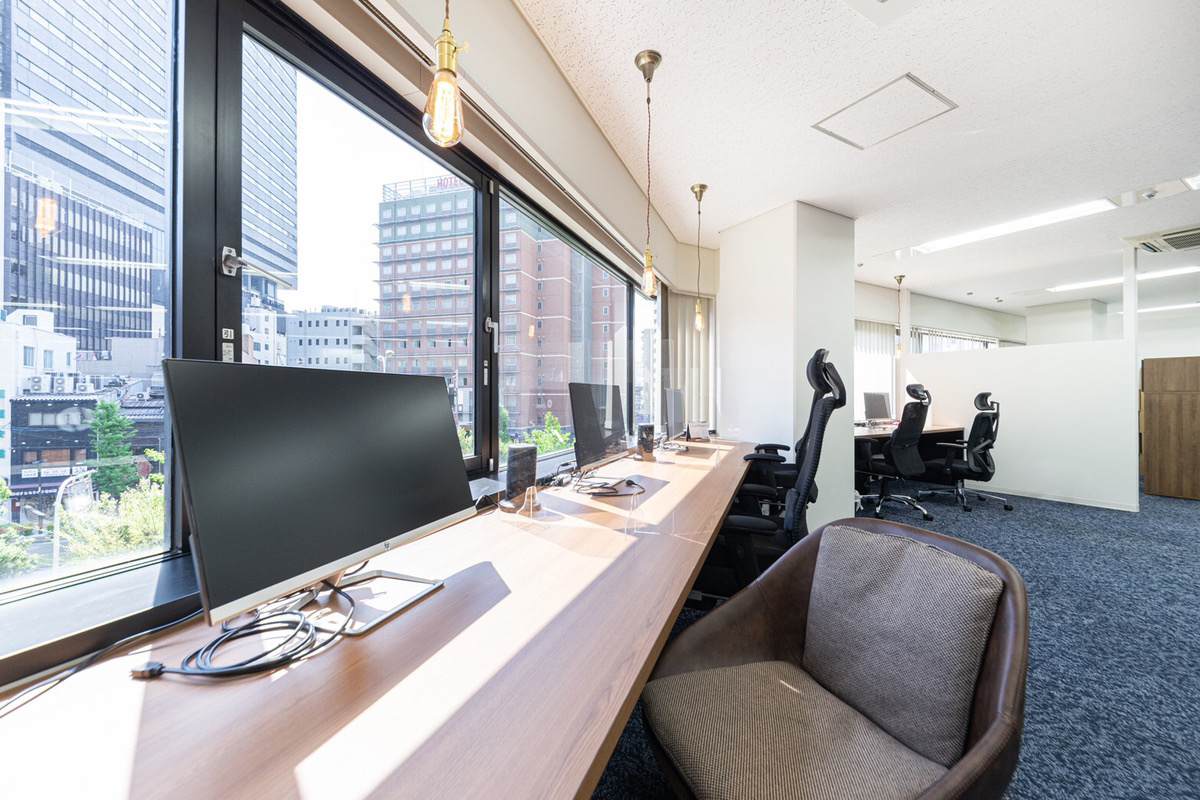
The open feeling is wonderful. The monitors installed make it comfortable to work
There are also other amenities such as different chairs for each seat, standing desks "concentration booths" where you can work without being seen by others
Small conference room "booth y"
There are two meeting rooms available to suit different needs
This is the small conference room commonly known as
"booth y." Incidentally, the booths in our company's conference rooms are named
"booth be," "booth y," "booth o," "booth n," and "booth d In other words, our company name, Beyond, is used as the name of the rooms.
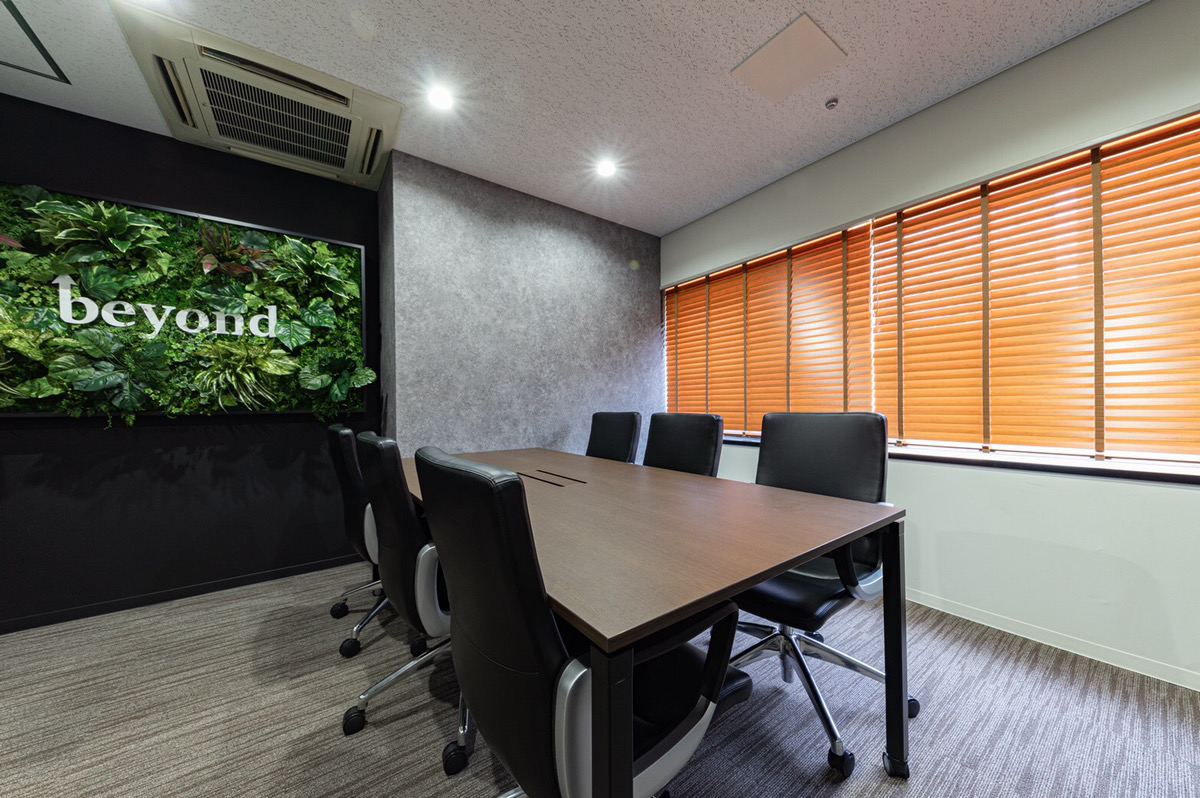
My personal favorite is the wall board with the company logo overgrown with grass.
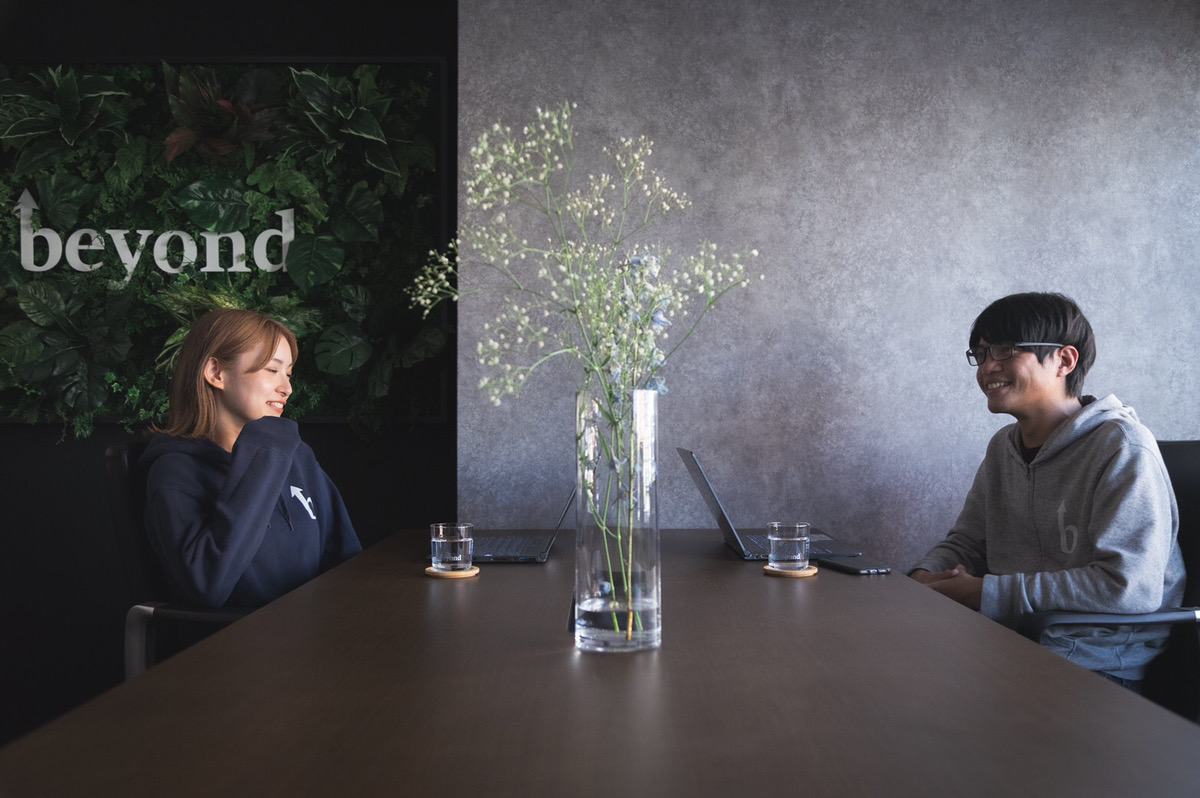
When photographed alone, it looks like this.

You can also take a photo like this by placing a vase of flowers in front of the lens

is designed to be used not only for meetings but a location for filming
For example, a photo could look something like this:
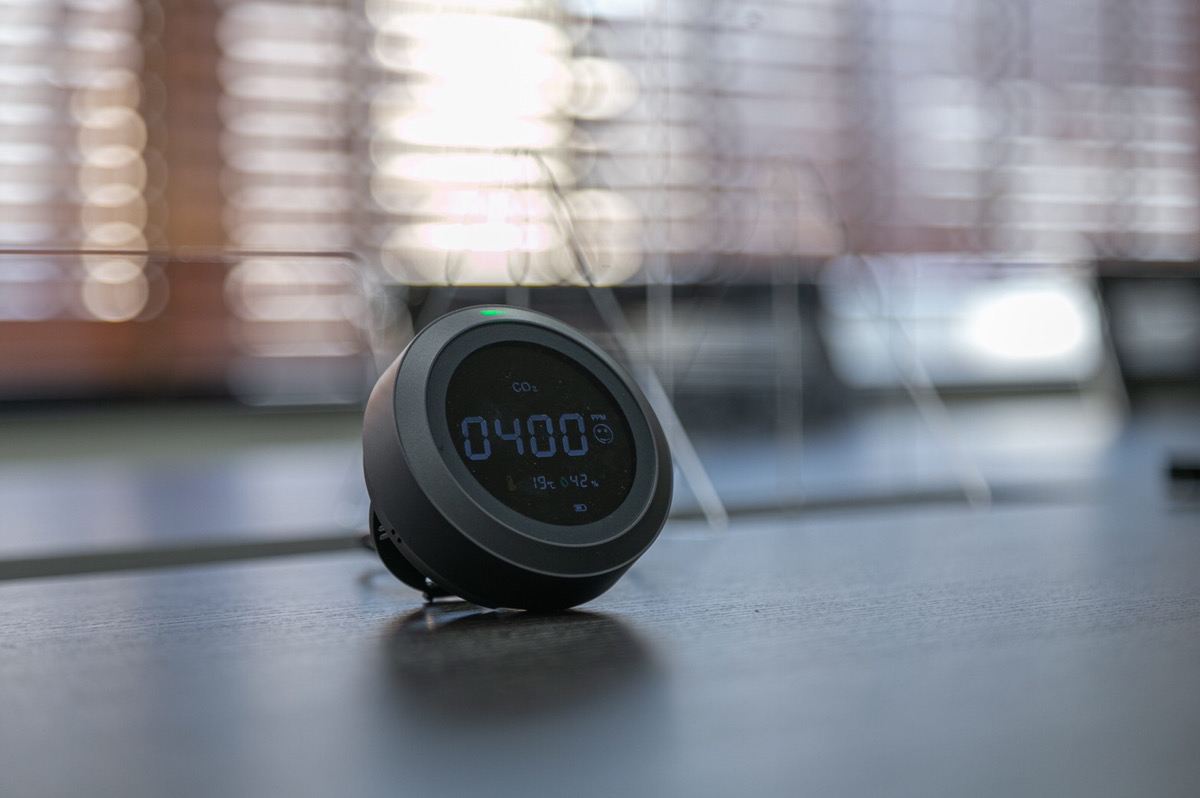
CO2 sensors have been installed in the conference rooms to detect whether the room is in a "three Cs" state
Large conference room "booth be"
Next, here is the main conference room, "booth be"
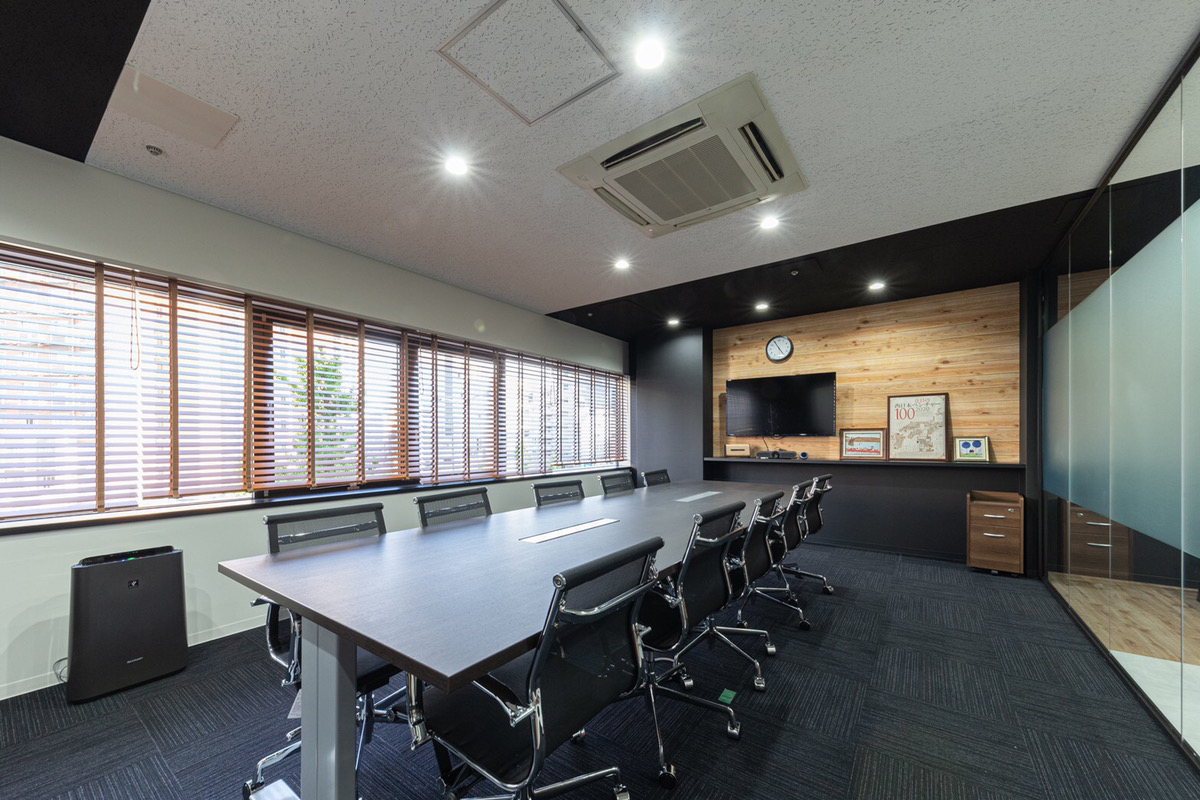
This room is used for large meetings or client meetings where you want to avoid crowding.
Both rooms have windows they can be ventilated
Also, the sense of openness is wonderful
Individual booths "booth o," "booth n," and "booth d" for online meetings and siestas
Due to the sudden increase in the number of online meetings, three individual booths have been set up.
These are not only suitable for online meetings also for taking a siesta break
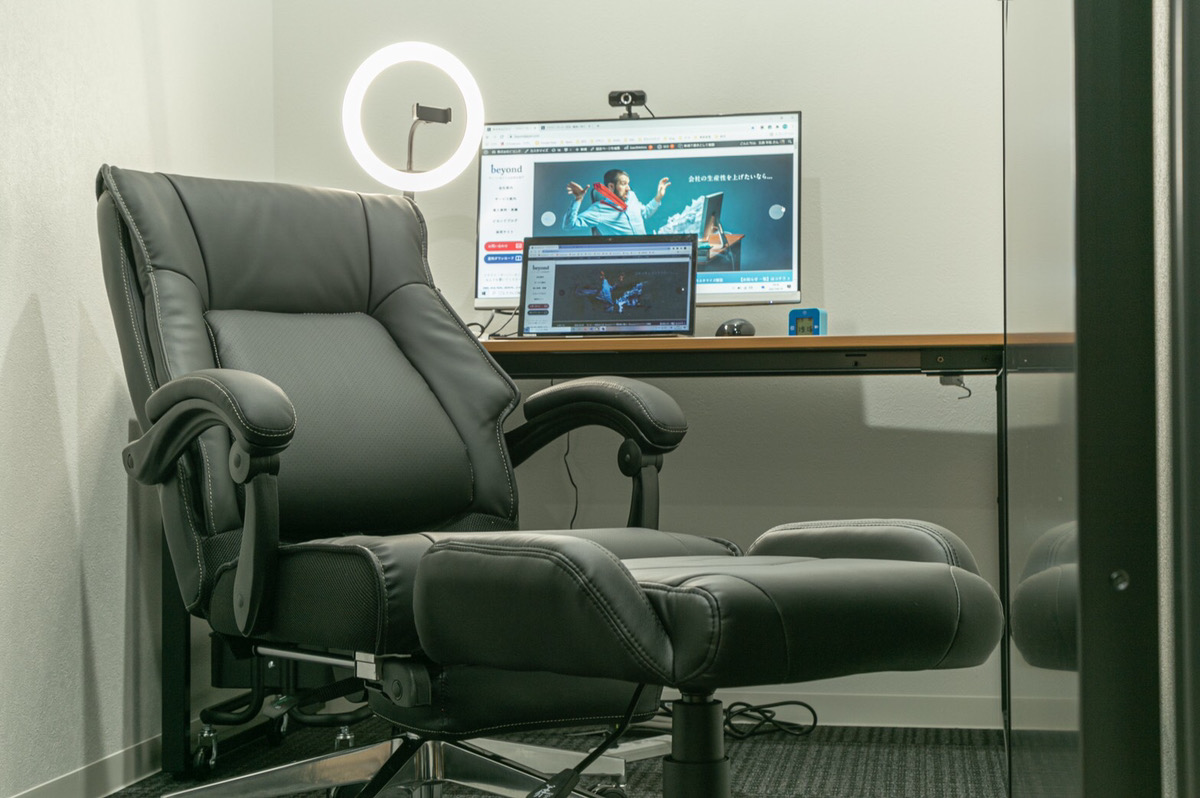
The desk is equipped with a webcam and a ring light
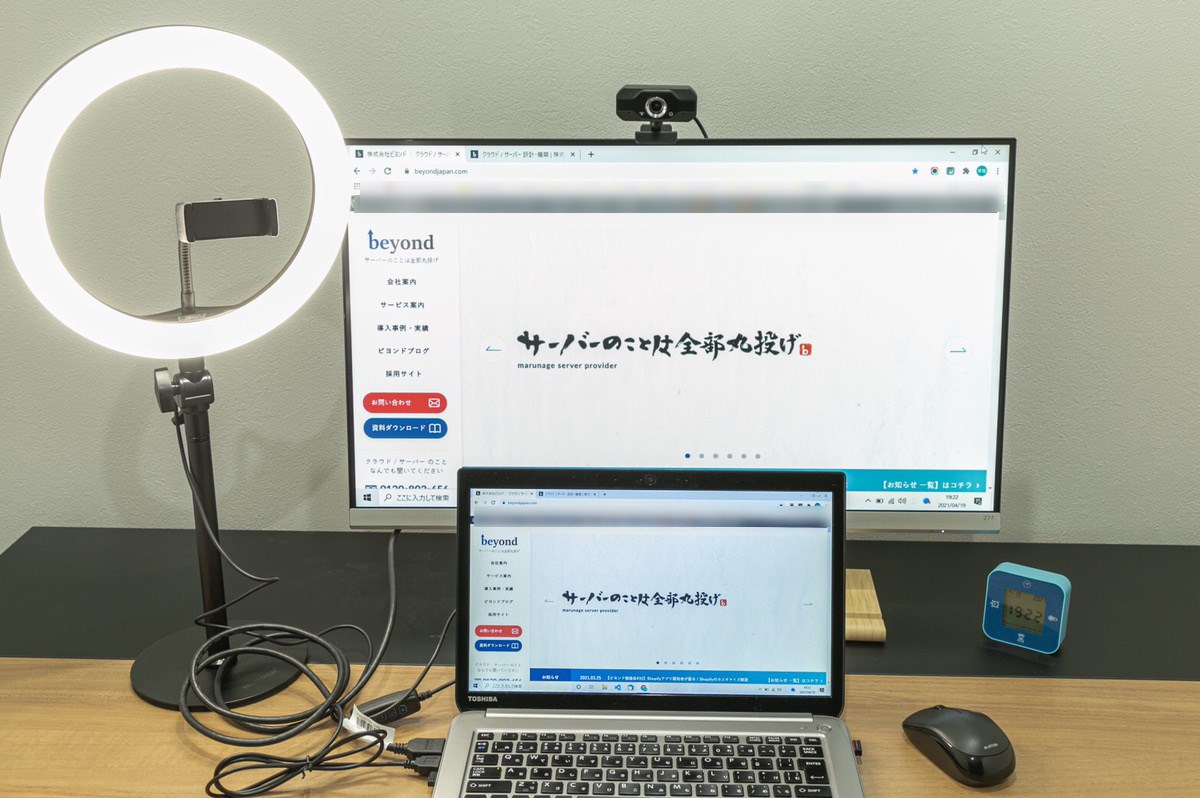
So what do you think of Beyond's new office?
Now, I will briefly share with you the architectural photography know-how that I have acquired through actually working on photography projects
Photographer explains! Tips for architectural photography that anyone can follow
Of course, camera skills are not something that can be acquired quickly, but this time we will introduce some points that will make a big difference in the quality of your photos, just by paying attention to these points
Before we introduce the key points of architectural photography, let's first summarize what kind of photos are ideal for architectural photography
What makes a good building? Deciding the direction of the shoot
First, what is a good building?
There may be some case-by-case aspects, but in most cases the following would roughly the definition of a "good building .
Definition of a good building (interior)
- It is spacious and has an open feel
- The room is well lit (there is plenty of natural light coming in through the windows)
- Clean, uncluttered and sophisticated
Therefore, important to take advantage of these conditions as much as possible in your photography .
if you clarify what kind of photo you should or want to take before taking a photo you will be less likely to get confused.
For more information on how to think about and practice taking the photos you want, please refer to the article below
[With examples] Photographer explains tips for taking beautiful photos with a smartphone
Below, we will introduce specific photography methods that will actually bring out the charm of a building
The key points are as follows:
Important points for architectural photography
- Shooting with a wide angle
- Shoot straight
- Don't take pictures of unnecessary things
- How to see the light
- [Extra Edition] Involving people in creating a story
I will briefly explain each step
Tips for Architectural Photography: 1. Shoot with a wide angle
To create an open feeling in a room, it is important to make the room appear as spacious as possible
a wide-angle lens comes in handy .
I use the SIGMA 12-24mm F4 DG HSM | Art .
When shooting with a single-lens reflex camera, these wide-angle lenses are the best option
If you don't have a wide-angle lens, try to shoot with the widest angle possible
Furthermore, many of the latest smartphones are capable of wide-angle photography , which is very convenient.
Architectural photography tip #2: Shoot straight
Here is the next point
You may be thinking, "Well, that's obvious,"
In this case, straight means both perpendicular and parallel
If you don't do this properly, you're likely to end up with distorted images, especially when shooting wide-angle shots
Photos taken in a distorted state are undesirable because they appear unnatural to the human eye.
The best solution to this is to turn on the camera's grid display and, if possible, to use a tripod
It's very difficult to suddenly take a photo that's both vertical and parallel, but try to be as careful as possible
Architectural photography tip #2: Don't include unnecessary things
This is a particularly important point that is often overlooked
For example, even in an office, often things such as trash cans that are placed in the room for the sake of functionality in daily life.
These kinds of things are hard to notice in everyday life, but when you capture them in a photograph, they can instantly disrupt your worldview .
Therefore, it is important to move any unnecessary objects to a location where they will not be visible before taking the photo
In this regard, unless you gain experience through trial and error, you are likely to overlook something
Based on my own experience, I would like to introduce some points that you should be careful of, so please refer to the following points first
Check before you take a photo! A list of unnecessary things you shouldn't photograph
- Make sure the cords and wires are not cluttered
- Avoid placing remote controls, tissues, etc. on the desk as much as possible
- If there are trash cans or other items on the floor, move them
- If someone gets in the frame, ask them to move only while you are taking the picture
- Make sure to smooth out any wrinkles that are easily noticeable, such as futons, beforehand
- Wipe off fingerprints on shiny desks and glass windows beforehand
On the other hand, the room is too drab and unsatisfying , you can add some color to the scenery by placing a vase or something similar.
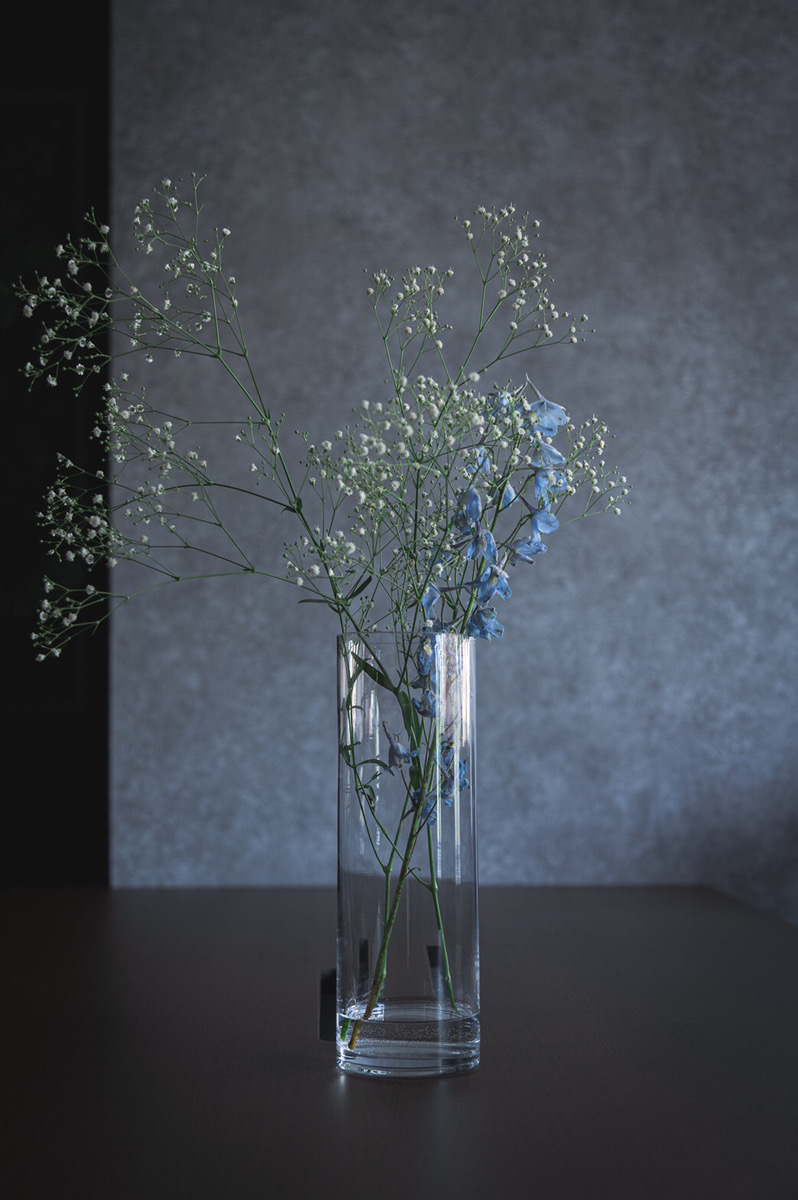
Here is an example of a photo taken with a vase placed inside
Architectural photography tip #4: How to look at the light
If the room is dim and dark, it's hard to convey the room's charm
Therefore, if it is daytime, opening the curtains to let light in and take photos in an environment with sufficient light.
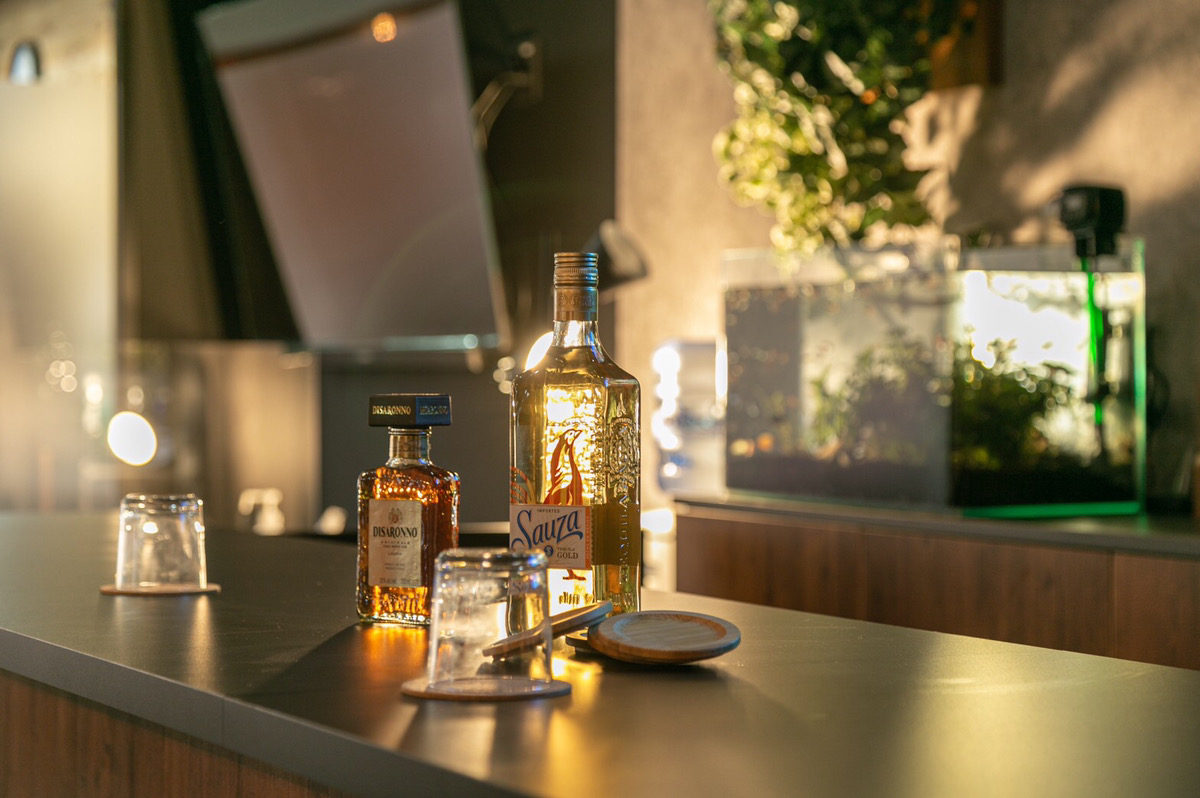
Even if you don't have natural light, it's easier to take attractive photos if you can add contrast to the light in the space with indirect lighting
For example, the photo below shows indirect lighting shining on the drinks to create an ambiance
To use light to your advantage when taking photos, check the following points and try them out
Things to check to make light your ally
- During the day, open the curtains to let in lots of natural light (if it's too bright, soften it with lace curtains)
- Basically, all the lights in the room are on (adjust as needed if there are too many)
- Indirect lighting creates a sharp contrast
[Extra Edition] Involving people in creating a story
Architectural photography is generally done without anyone in the photo, but sometimes it is better to have people in the photo to better convey the appeal and functionality of the space
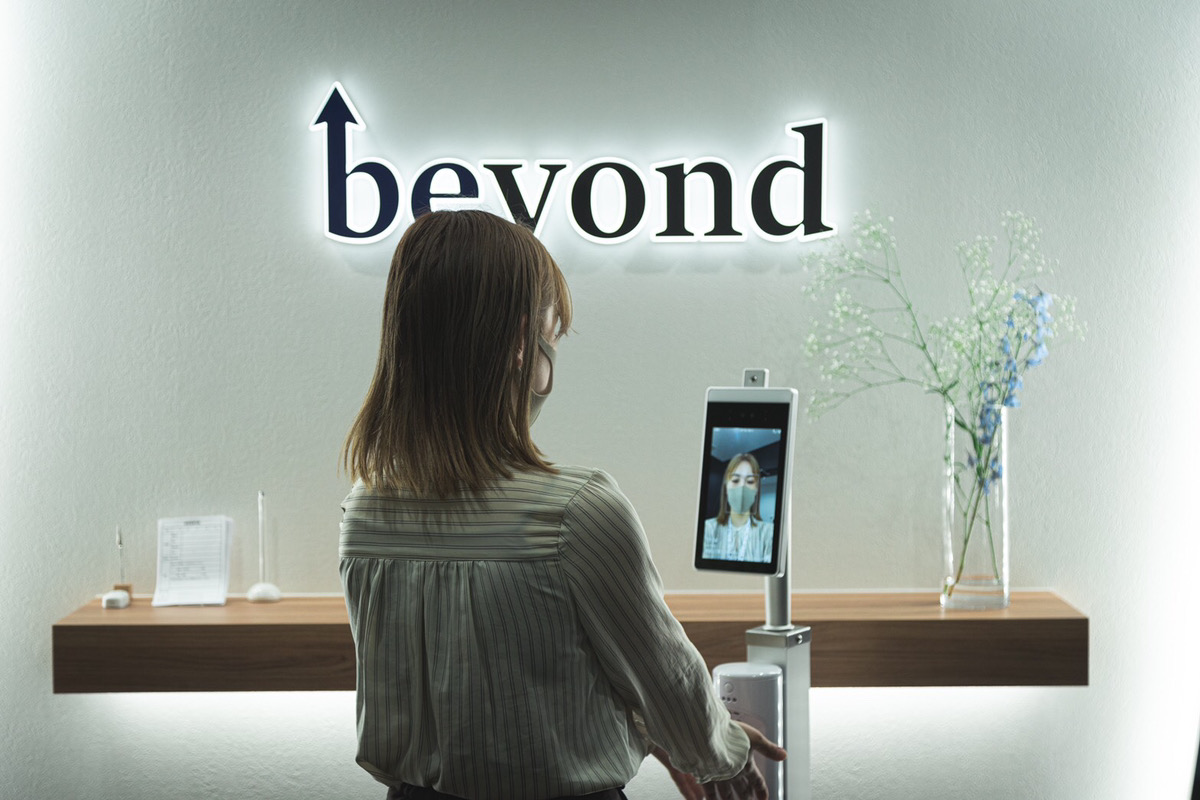
For example, the entrance to our new office is equipped with a non-contact thermometer and dispenser, but even if you take a photo of it without any staff,
At first glance, you might wonder, "What is this stick with a tablet attached to it?"
So, by having our public relations representative, Fujisawa, take a photo as if he were actually using the product, we were able to create a photo that made it easy to understand the function of the stick, which was previously quite confusing
summary
So, that's it for the photos I took of our Osaka office and some tips for architectural photography!
My photos are posted on Instagram (@gotoh_2682)
Thank you for reading to the end
 4
4 Loading...4



The person who wrote this article
About the author