
[Shenzhen, China] Interview with a local subsidiary about what happened after entering China
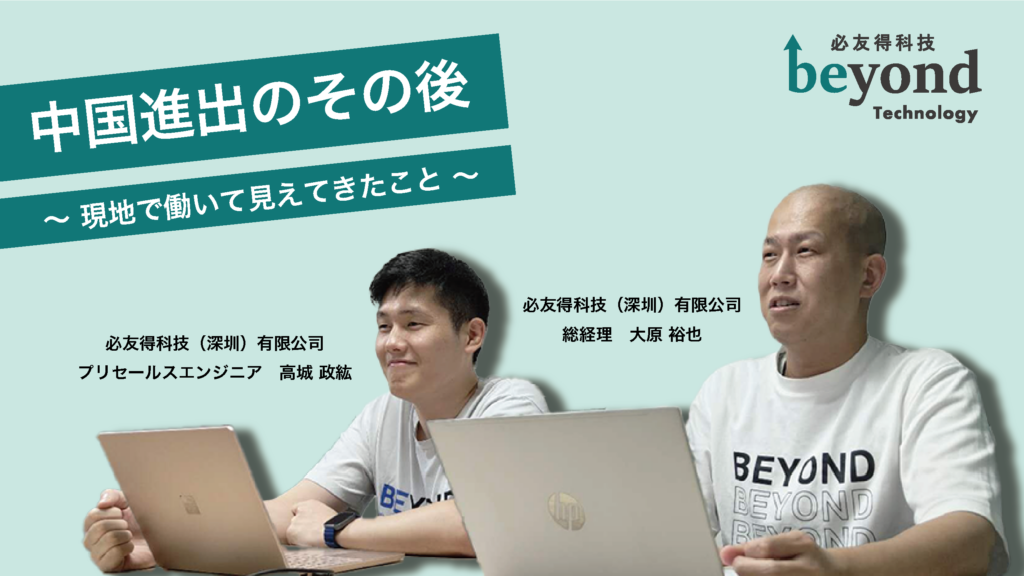
table of contents
- 1 What prompted you to enter the Chinese market? What are your current initiatives in China?
- 2 What are the differences between business in Japan and China?
- 3 Please tell us about the gap between the Chinese cloud market and the Japanese market
- 4 What are the differences between MSP technologies and companies in China and Japan?
- 5 What kind of reaction has Beyond's technology and services received in China?
- 6 Please tell us about the strengths and things that only Hitotsu Tech can do
- 7 How do you differentiate yourself from Chinese IT vendors?
- 8 Please tell us about your future strategies and business developments for Pioneer Technology
- 9 What is the most important thing you want to convey to Chinese customers?
- 10 summary
Beyond's China office, "Beyond Technology (Shenzhen) Co., Ltd.," officially commenced operations in China on February 19, 2024.
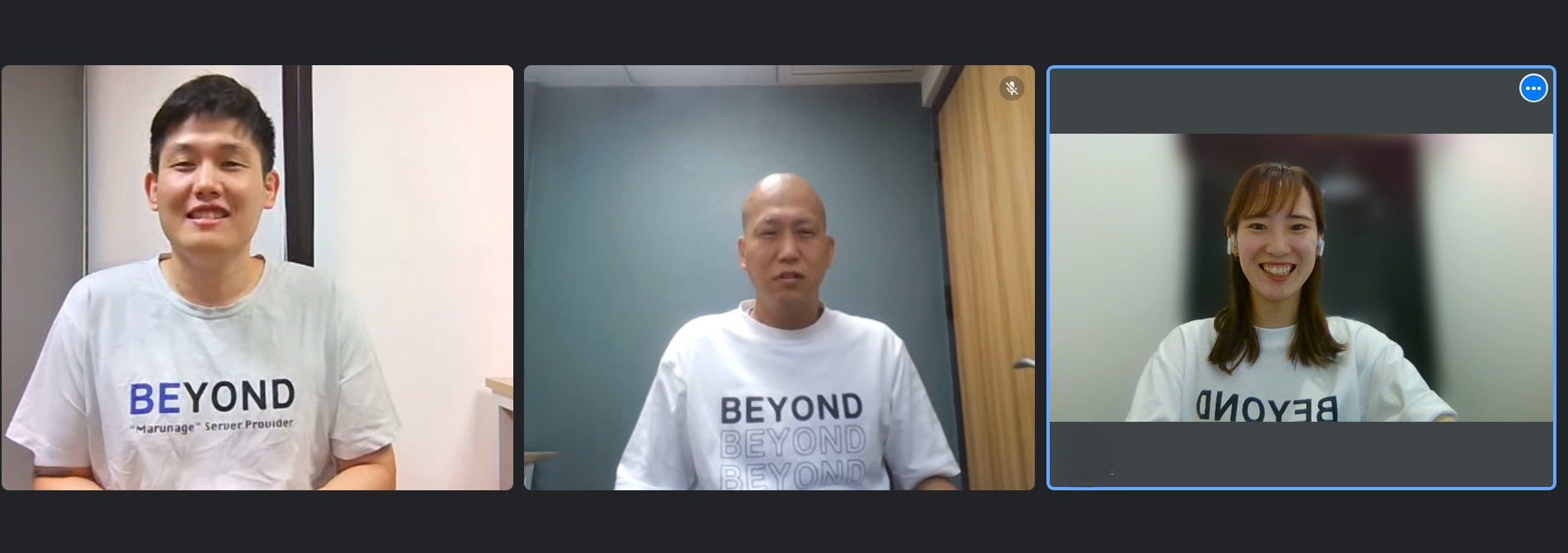
This time, we interviewed two people, Mr. Ohara and Mr. Takagi, from Bidto Technology (Shenzhen) Co., Ltd
◆ Interviewer: Asaka Komatsu (Beyond Public Relations)
What prompted you to enter the Chinese market? What are your current initiatives in China?
Ohara: Around 2018, Chinese services such as Alibaba Cloud started to enter the Japanese market in droves, and when we felt the momentum of Chinese IT services, that's when Beyond started considering entering the Chinese market.
The first thing we did in preparing to expand into China was to visit various regions in China. We continued our research by having interviews and meetings with local Chinese companies and similar Japanese companies that had expanded into China, and at the same time, while repeatedly considering expanding into China, we also gradually made progress in learning how to open a local subsidiary in China and preparing to do so
However, during this time, the COVID-19 pandemic made it impossible for us to travel to China, and Beyond's research and exchanges in China came to a halt for a time. However, even in times like these, we were determined to move forward even if just a little, so we continued to gather information online and look for partner companies
Takagi:In the Shenzhen and Guangdong province area where we are located, there are a lot of manufacturing customers, but there seem to be few IT companies like ours that mainly develop server infrastructure businesses. We consider it a key theme for our activities to think about how to deploy Beyond's services in such a field and what kind of needs exist.
---Is the business of the Chinese office positioned as an extension of the business in Japan?
Ohara: First of all, Beyond operates a business called "MSP" in three countries: Japan, China, and Canada, where we handle the construction and operation of cloud services and servers such as AWS and Alibaba Cloud.
The business of this Chinese office is an extension of the business we do in Japan, but when asked, "If we can do it in Japan, can we do it in the same way in China or overseas?" that's a different story
We feel that localization is necessary to adapt to the culture and business practices of China and other countries, and to meet the needs of each customer, so we are constantly experimenting in this area
What are the differences between business in Japan and China?
Ohara:In Japan, when you meet a client for the first time, it's very common to exchange business cards, greet them, exchange information, and build a connection by saying you'll see them again if anything comes up.
However, in China there is a strong tendency towards an introduction culture, where people buy or do business with companies they know, and I feel that these differences in business practices make it difficult. Also, with the widespread use of IT services and apps, the fact that most things can be done using WeChat and its mini-programs is very advanced, and I think this is a big difference from Japan
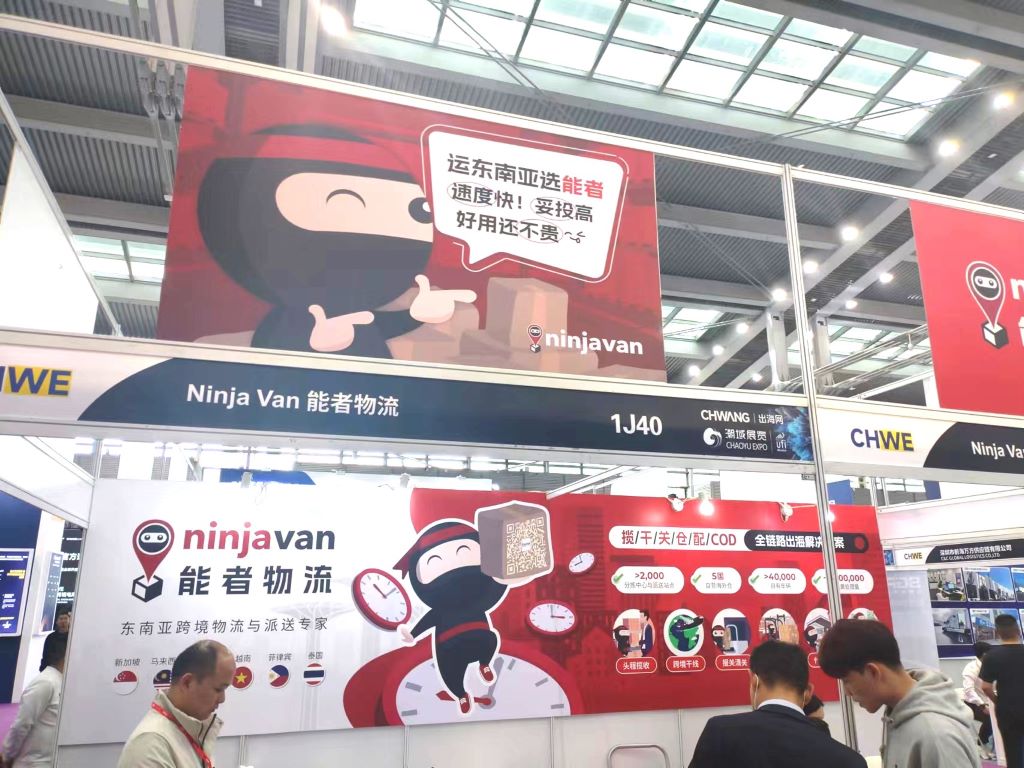
<Scenes from the 3rd CHWE Global Cross-Border E-Commerce Exhibition>
---Are WeChat and social media important in China?
Ohara:Not only WeChat, but smartphones are a vital lifeline. In fact, I can't do anything in my daily life without a smartphone. In business, communication is primarily done through WeChat, and more than 90% of transactions are completed through WeChat. Many people don't even have paper business cards anymore, and most greetings begin with exchanging contact information via WeChat.
---Are paper business cards not used very often?
Ohara:Paper business cards do exist, but I feel they aren't as important as they are in Japan. Also, when exchanging contact information on WeChat, business card data is sent, and that business card data can also be created using the WeChat mini-program app, so exchanging paper business cards is almost nonexistent.
Takagi:When I was in Japan, one of the things that stuck with me about the differences between doing business in China and Japan was the "sense of speed." Even before going to China, I had heard that communication and responses were very quick there, but when I actually started working there, I was really impressed by how quick and agile communication and responses were. I had an image of speed, but since I had nothing to compare it to, it was just an image. It's the same in my everyday work, but everyone I interact with is really quick to respond.
For example, in terms of quality, I think Japanese people have a basic sense of "trying to submit something as close to 100% as possible to the customer," whereas in China, it seems like they work by "submitting something to the customer at 50-60% completion, then making revisions to get it to 80%, and then going back and forth a few times to get it to 100%."
In terms of speed, it's certainly fast, and it feels like everything is moving forward. When I think about Japanese business practices and how work is done, I feel there are quite a few differences
--- Was this something you could only feel by actually going to China?
Takagi:That's right. Even while in Japan, you can learn things by researching on YouTube or Google, or by hearing from friends. But I think the reason we were able to learn about it is because we actually lived and worked in China and experienced it firsthand.
---So if you don't have a sense of speed, you won't be taken seriously?
Takagi:I think that's a possibility. For example, let's say we proceed with things based on our common sense, predicting that "this will be best for the customer."
However, if we don't understand that our own definition of what is best is not necessarily what our customers think is best, I think that a difference in speed will become apparent. In this regard, I think it is necessary to take action to adapt to the culture of each country to some extent
Please tell us about the gap between the Chinese cloud market and the Japanese market
Ohara:In Japan, AWS has a large market share, followed by Azure and GCP. In China, however, Alibaba Cloud has a large market share, followed by cloud services such as Huawei Cloud and Tencent Cloud. AWS and Azure are also available in China, but they don't seem to have the overwhelmingly large market share they do in Japan.
---When you think of cloud computing in China, does Alibaba Cloud come to mind?
Ohara:In addition to Alibaba Cloud, there are also cloud services like Huawei Cloud and Tencent Cloud, as well as cloud and hosting services provided by local Chinese data center operators. Chinese customers use different server environments depending on their needs. I think this varies from person to person depending on their perception, so it's hard to generalize.
---Do you handle the Chinese version of AWS?
Ohara:Beyond supports multi-cloud environments and handles the construction and operation of infrastructure using various cloud platforms, including AWS and Alibaba Cloud. This is the same system at Beyond's China office, where we build and operate infrastructure on the cloud that best suits the needs of our Chinese customers, so either option is fine.
Furthermore, the Chinese version of AWS can only be opened and used by companies with local Chinese subsidiaries, so Japanese companies without local subsidiaries in China cannot use it even if they want to. However, Beyond has established a local Chinese subsidiary, which allows it to use the Chinese version of AWS and provide technical support for the Chinese version of AWS
What are the differences between MSP technologies and companies in China and Japan?
Takagi:I previously attended a Huawei Cloud partner event (Huawei Cloud APAC Partner Connection Summit) held in Dongguan, China, and when I spoke with partner companies similar to Beyond, I got the impression that many of them were focusing on specific industries and providing services like MSPs.
For example, I heard that some companies specialize in fintech or AI-related fields and industries, and even build and operate the infrastructure. Certainly, if you specialize in a certain field or industry, you can reuse similar technologies, even if the details are different, and it creates an environment where knowledge can easily accumulate within the company, which seems to make management and operation more efficient within the company
Currently, Beyond's China office does not focus on any particular industry, and the sales and engineering teams work together depending on the client's case or project. However, with other overseas vendors, it seems that there are surprisingly many companies that focus on a specific industry and offer MSP services, so this is what sets Beyond apart
Indeed, by narrowing down the target industry or field, it may be less likely that you will be in complete competition with other vendors, and I felt that it would also help you differentiate yourself from your competitors
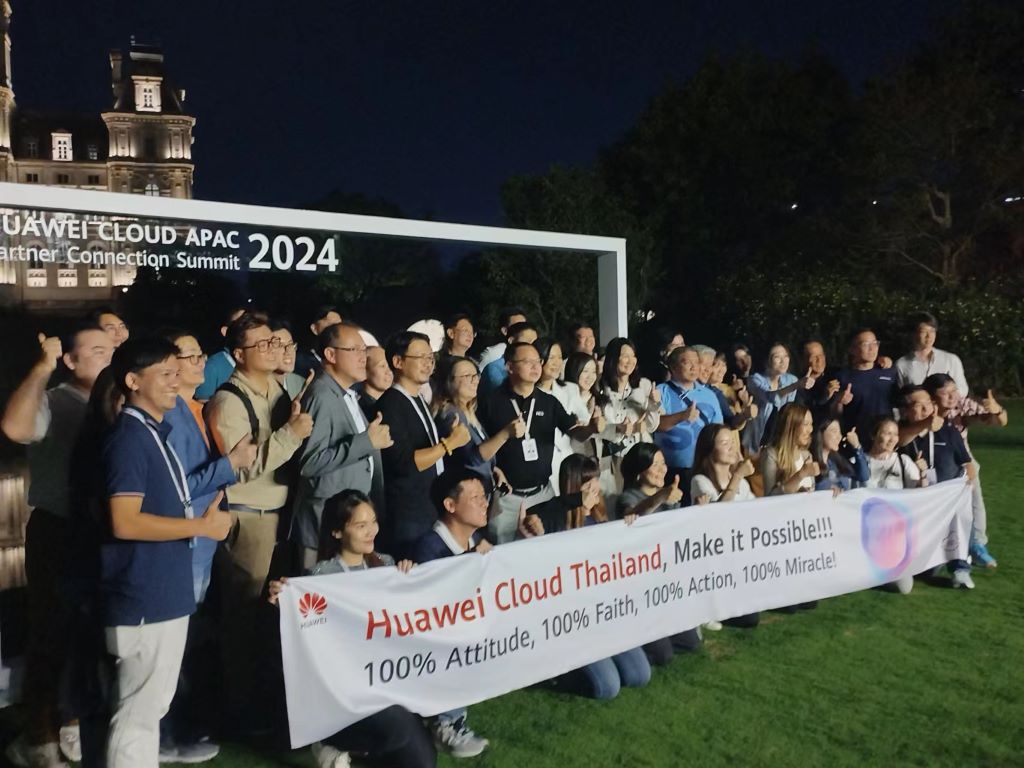
<Huawei Cloud partners from Thailand>
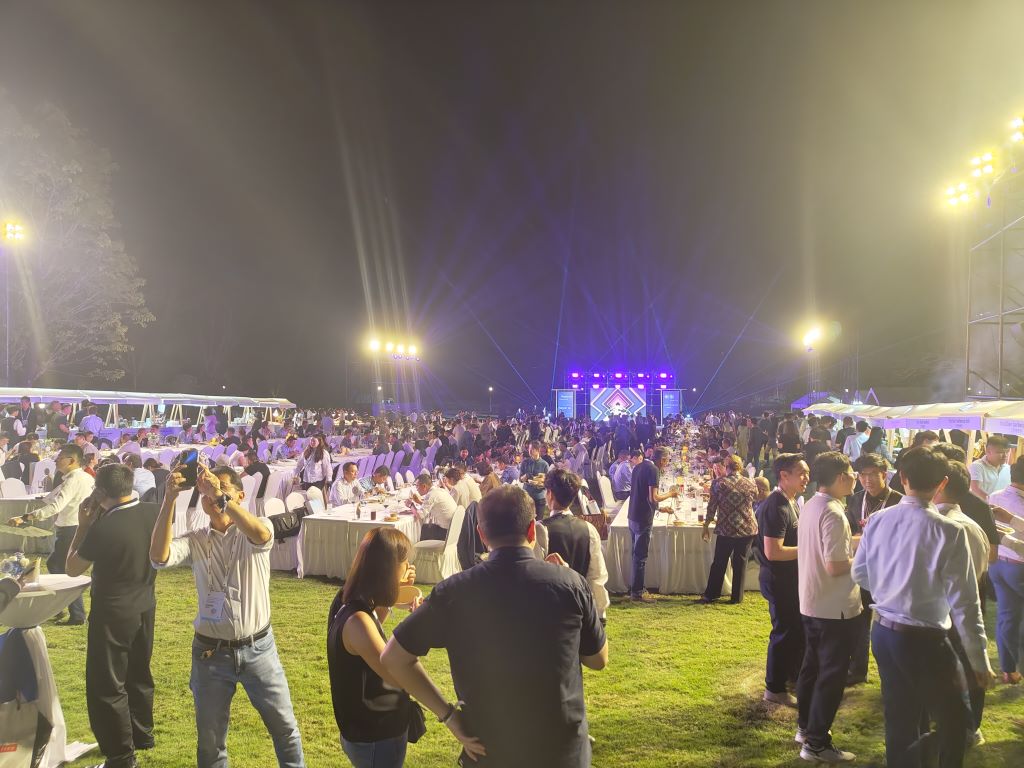
< Huawei Cloud partner networking event >
What kind of reaction has Beyond's technology and services received in China?
Ohara:Currently, we mainly work on projects for Japanese companies, so when we introduce Beyond's technology and services, we often hear that they are facing challenges with the current systems of their local subsidiaries in China.
Additionally, there are cases where people say, "We're somewhat familiar with AWS in Japan, but we don't know much about Chinese cloud services like Alibaba Cloud," and there may be surprisingly few Japanese IT vendors that can flexibly address these issues. When faced with situations like this, I feel that there are many Japanese companies with the potential concern of "if only we could turn to a Japanese IT vendor that understands Chinese cloud technology."
Takagi:Beyond offers technical support, of course, but I think a major feature is that engineers with deep knowledge of server technology are available 24/7 to provide human support.
This may not be unique to China, but when I talk to various people, I often hear things like, "We accept inquiries 24 hours a day, 365 days a year," but "actual work is only done on the next business day," or "We outsource the actual server operation work to a separate external company."
In contrast, Beyond, as is the case in Japan, has received positive feedback from customers for its ability to provide 24/7 technical support, with its own engineers interacting with customers. This has also been met with positive feedback in China, where the service has been rolled out
---Are the strengths of Japanese services resonating in China as well?
Takagi:That's right. The Chinese market is highly competitive in terms of price, but conversely, Beyond has this advantage, and I feel it's a strength that allows us to demonstrate the basis for the value of our services.
---Is price a particularly important factor in China?
Takagi:This isn't just limited to IT services; I think it ultimately comes down to price competition in any field. While this might be acceptable for those receiving or enjoying the service, for those providing the service, how they perceive and implement that price is a crucial factor.
Please tell us about the strengths and things that only Hitotsu Tech can do
Takagi:First of all, I think having a local subsidiary in China is a really big advantage. Through actual experience working there, I can absorb firsthand information about China, so my knowledge increases every day. It's not just information I've picked up from the news or the internet, but I can deliver information that gives me an advantage, which is one of my strengths.
Unless you are actually in China, it is often difficult to understand the situation, so I think that one benefit of sending out an approach from China such as "This is how we will proceed" is that it puts you in the customer's position
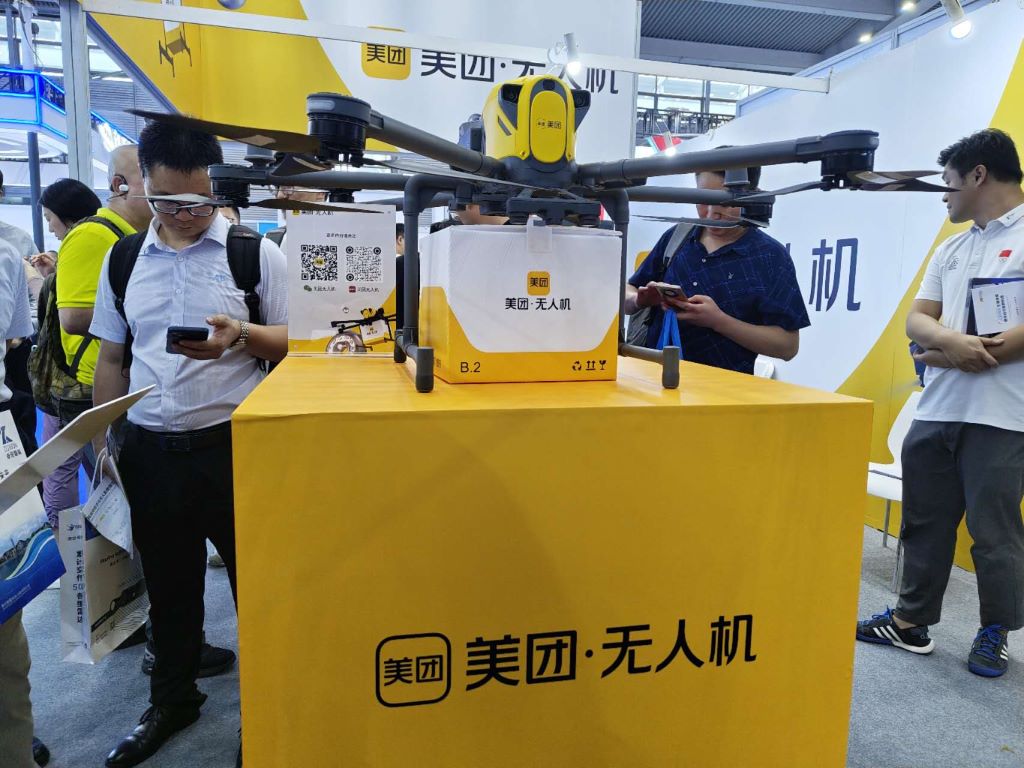
< "Meituan Unmanned Aircraft" (delivery drone) on display at UASexpo 2024>
---It seems like it would be reassuring for customers
Takagi:That's right. I'd be happy if it could be one of the things that makes people feel at ease.
Ohara:A key feature of our company is that our headquarters in China is located in Shenzhen, which is known as a hub of technological innovation in Asia. This allows us to quickly catch up on a variety of new technologies and ideas.
Other Japanese IT vendors tend to have their headquarters in places geographically close to Japan, such as Shanghai or Dalian, but perhaps because Shenzhen is home to many hardware companies, it seems that there are few Japanese IT vendors that deal with server and software services like Beyond, so Beyond has an advantage here as well
We feel that the advantage of Shenzhen's location is that we can provide locally based IT support to Japanese companies in need in Guangdong Province, and since it is close to Hong Kong, we can broaden our business operations
In addition to being a Chinese cloud MSP, we are also able to handle web system development, Chinese website production, WeChat mini-program development, etc. We can work closely with Beyond's Japanese headquarters to advance projects, which is another source of peace of mind for our customers
---Have you incorporated anything into your business since you established a local subsidiary in China?
Ohara:Yes, that includes establishing a local subsidiary in China, but there were also many things we wouldn't have realized until we actually worked and lived in China. In particular, we had some very difficult issues with the internet, and it was because of our own experiences that we were able to start a SIM service that can be used in Japan, China, and overseas.
We came up with this service because we felt that "the problems we face are also needed in the world," and it's not just us who use it; other Beyond members also use it when they travel or go on business trips abroad
◆ Chinese SIM service "ChocoSIM - powered by beyond -"
How do you differentiate yourself from Chinese IT vendors?
Ohara:Beyond's MSP (Managed Service Provider) is dedicated to supporting our customers' businesses by ensuring that their systems and applications operate stably 24 hours a day, 365 days a year.
However, in order to maintain high-quality technical support 24 hours a day, 365 days a year, there is an inevitable barrier of "nighttime support," so we believe it would be difficult for a single country to provide stable technical support at all times
In the case of Beyond, they have a base in North America (Canada) as a wholly owned subsidiary, and they are able to provide high-quality technical support by taking advantage of the time difference between day and night, which differentiates them. I think there are few IT vendors that have established such an operational system, not only in China but also in Japan
Takagi:What we particularly want to emphasize to our Japanese corporate clients in China is, of course, the language aspect, but also the fact that we can provide services with a similar feel to what you would experience in Japan, and with the same quality as in Japan. In a sense, showcasing our Japanese identity and working together with our clients is what differentiates us from local IT vendors in China.
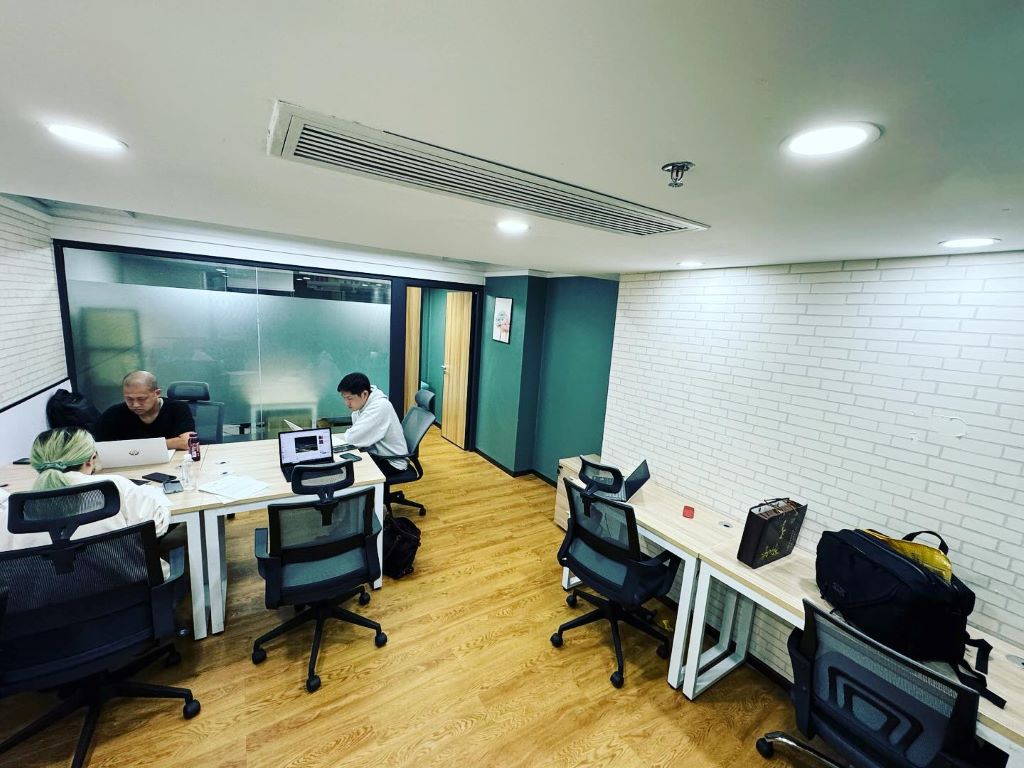
< Inside the P&P Technology office >
Please tell us about your future strategies and business developments for Pioneer Technology
Ohara:We will develop a service that becomes synonymous with "Byoude Technology," a service that people will say, "If it's Byoude Technology, it's this service." In addition, it would be interesting to re-import the services developed by Byoude Technology into Japan and deploy them in the Japanese market. Furthermore, we would like to expand our market within China, and also provide services to countries such as Singapore, while being based in Shenzhen.
---So it's not just limited to China
Shenzhen has good transport access to Singapore, a financial and logistics hub in Southeast Asia, and is in an environment where business travel is relatively easy. For this reason, we are considering business collaboration with the region, including Singapore, in the future
Although Singapore is not exactly the same as China, there are likely to be some similarities, so I think it is one of the markets that is relatively easy for Japanese people to expand into, taking into account cultural differences and time differences
Also, perhaps due to the weak yen, the number of foreign tourists in Japan is currently increasing significantly. Looking ahead, we would like to develop WeChat mini-programs for Japanese companies to attract inbound tourists from both Japan and China
What is the most important thing you want to convey to Chinese customers?
Ohara:"Beyond's MSP is also available in China," so I would definitely like people to try out Beyond's services.
Takagi:Beyond has many engineers who are flexible and have strong technical skills, so we would be happy if you entrusted us with server and infrastructure matters in China as well!
summary
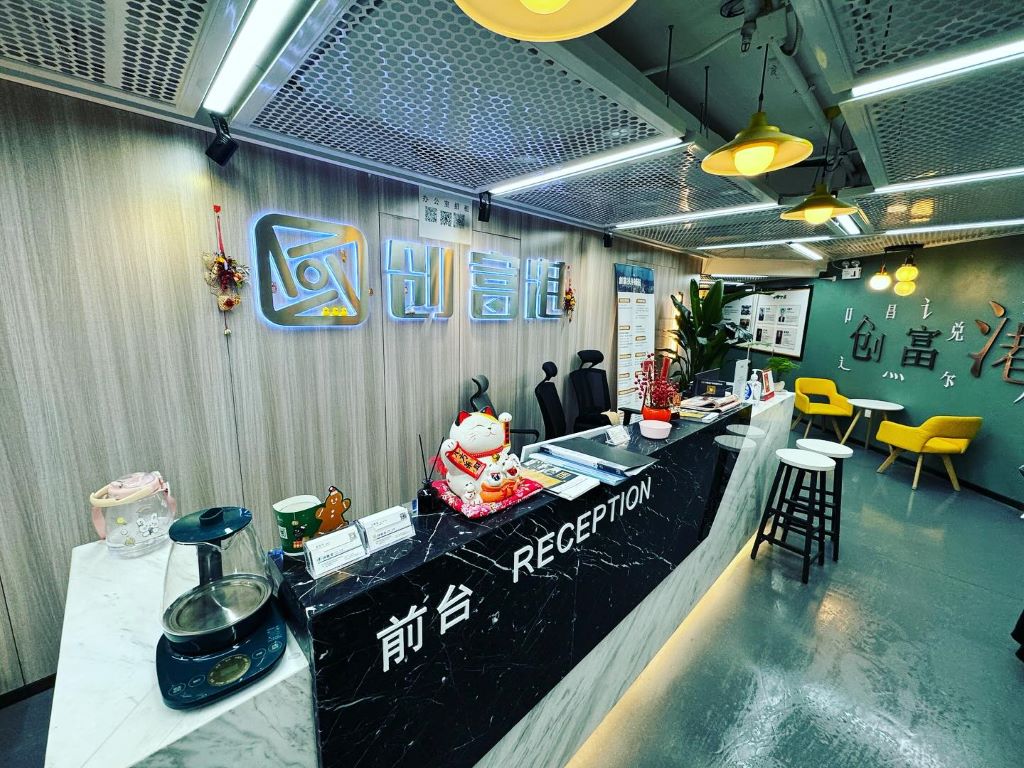
< Front desk of the rental office where Biyoude Technology is located >
This concludes the interview with Beyond's China office
Through this interview, I feel that my image of China, which I previously had a hard time imagining, has gradually become clearer by listening to his actual voice.Of course, this is only a small part of what we know about China and Pioneer Technology, so I would like to continue catching up on various information in order to deepen my understanding even further
The establishment of Beyond's China office, Piyoude Technology, will undoubtedly have a major impact on Beyond as it creates a new future. Please continue to pay attention to the developments of Beyond's China office, Piyoude Technology
Beyond and Biyoude Technology provide technical support for cloud/server construction and operation to Japanese companies and local corporations expanding into China
If you are a Japanese company in China and have any problems with cloud/servers or systems, please feel free to contact us
◆ Interviewer: Asaka Komatsu (Beyond Public Relations)
Company Profile
● About Beyond Technology Shenzhen Co., Ltd. ( https://beyond-shenzhen.cn )
* English name: Beyond Technology Shenzhen Co., Ltd.
-
Chairman: Masahiro Haraoka
General Manager: Yuya Ohara
Established: August 31, 2023
Capital: 20 million yen (Japanese yen)
Business activities: Server support business, system development business, IT business support business
 8
8 Loading...8



The person who wrote this article
About the author