

The next generation of leaders doesn't have to be perfect! What's the difference between "guiding" and "scolding"?

Hello!
I'm Inoue, the Persian cat at Beyond Shikoku office.
The 3rd "SO Next Leader Development Training Session" was held on
Friday, October 23rd
The theme this time was "Guidance."
Guidance is a difficult concept, isn't it?
Just a slight difference in nuance can make it seem like "scolding" or "criticizing.
" Guidance is an absolutely essential action for any leader when it comes to their subordinates.
We learned about the differences between "warning" and "guiding."
What does it mean to teach?
To instructmeansto teach and guide someone in the right direction while pointing out their mistakes.
What's important in "instructing" is whether you can "teach and guide them in the right direction.
" "Scolding" and "blaming" involve feelings of anger.
The root of anger lies in the "should" way of thinking that you have within yourself.
Anger arises when your internal idea of "should" betrays you.
If you try to give a warning while still feeling angry, it will come across as "scolding" or "blaming." It is
said that the peak of anger lasts for 6 seconds, so
when you feel angry because your idea of "should" has been betrayed, try taking a deep breath for 6 seconds.
By doing so, you can move away from the temporary "anger" and become able to forgive even if your way of thinking is slightly different from the other person's.
Then you will be able to think about things calmly and choose your words carefully, so you will be able to "instruct" properly. This
means that anger management (controlling your own anger) is important for instruction.
And,my previous blog,"praising" is also very important.
"Praising" sends the message, "I'm paying attention to your work!"
Without that message, it's difficult to build trust in a hierarchical relationship.
Those in leadership positions must give precise instructions and guidance, and be someone others can always consult.
To become someone others can always consult, it's necessary to maintain good communication on a regular basis by "praising" them.
What is a leader?
■Be aware of this as a leader's mindset
- Show a positive attitude
- Don't create an atmosphere where it's difficult to talk to people
- Don't force your way
- Don't be overwhelmed with your own work
- I sincerely apologize for this mistake
- Say "I'm sorry" and "Thank you."
- He shows no signs of self-preservation
- Don't be swayed by emotion
■Things to keep in mind when giving instructions
- When teaching, teach now, not later
- Be clear about your reasons for teaching
- Provide guidance based on the location
- Keep your emotions under control
- Don't just be negative
- Be tolerant of one failure
- Make them think of ways to improve
It's important for leaders to support a sense of challenge, focusing on what their subordinates "want to do" rather than what they "should do." "
Wanting to do something" is more proactive and responsible than "should do.
" It's crucial for leaders to be able to accept and
support their subordinates' desires.
We don't need perfect leaders anymore
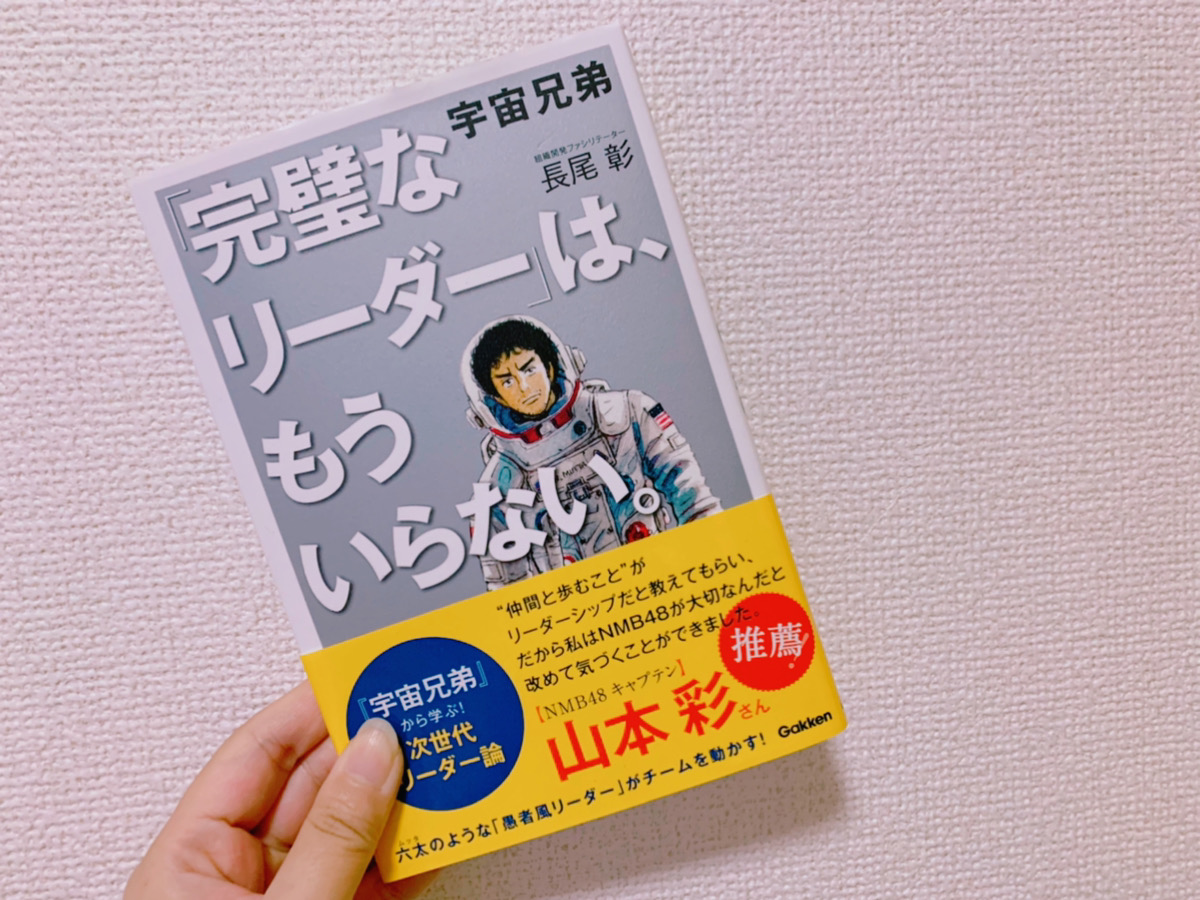
Are you familiar with this book?
At the 3rd Next-Generation Leader Development Training Session, I had the opportunity to listen to a lecture by Mr. Akira Nagao, the author of this book.
I had read "Perfect Leaders Are No Longer Needed" beforehand and was very much looking forward to Mr. Nagao's lecture.
This is because, with the recent addition of new members to our Shikoku office, I
have become interested in the position of leader.
This book describes two types of leaders:
the wise type and the foolish type.
The wise type of leader is the kind of person that comes to mind when I am asked, "What is a leader?"
They are the most capable person, accomplish more than anyone else, and lead the team from the front.
On the other hand, the foolish type of leader does not create a hierarchical structure,
acknowledges their own limitations, and utilizes the strengths of each person in the team. There is
a quote in "Perfect Leaders Are No Longer Needed" that goes like this:
The wise man tries to take the lead and pull the team along, while the foolish man waits his turn without taking a superior position
I asked Mr. Nagao, "What should I do while waiting for my turn?"
He replied, "Waiting for your turn means creating your own opportunity." He
also said that what's important for a leader is "to relax and value humor." I
've read this in other books as well, but valuing humor (playfulness) is important in work and life.
A person who "relaxes and values humor" is someone who can make others relax.
who can always be someone you can talk to, someone who doesn't intimidate people
but rather makes them relax.
Following the Next Leadership Training Seminar
First, I learned that in order to "guide," it's important not to let your personal emotions (anger) get in the way.
I don't usually get angry very often, but I know this varies from person to person.
However, if you wait six seconds after feeling angry, the peak of your anger will pass.
Taking a six-second break when you feel angry is
something anyone can do, so I encourage everyone to try it.
Just remember that it's important to "praise" before "guide.
" Praise is a form of communication that builds good relationships. Saying
"thank you" is also a form of praise, so say "thank you" often.
If you take it for granted and stop saying "thank you," you'll stop having opportunities to say it. I
overcoming obstacles
by leveraging each other's strengths to get there
Lately, I often think that "it's good that people are all different."
Of course, everyone has shortcomings, but everyone also has many times more wonderful strengths and advantages.
Shortcomings are also part of individuality, so when you think about it that way, they are indispensable to the other person and to me.
I want the members of the Shikoku office to be just as unique and individual as those in the Osaka office.
That's because I believe it's a great team where individual personalities are respected and where people can realize their aspirations.
Growing every day, moving forward every day.
I must update myself every single day!!!
Thank you for reading to the end.




The person who wrote this article
About the author