
How to study for LPIC Level 1 from scratch

I'm Nakagawa from the infrastructure team
I recently obtained my LPIC Level 1 certification as part of a training program.
Prior to that, I had never even touched Linux, so I started from scratch. I
'd like to share my study methods and experiences for those who are learning LPIC from the beginning.
The books and websites I used as references are as follows:
Linux Textbook LPIC Level 1,
Linux Textbook LPIC Level 1 Speed Master Problem Set:
Learn the basics of LPIC in one week,
Ping-t
What is LPIC?

Before explaining LPIC, it's essential to understandLinux.
Linux is one of the fundamental operating systems (OS) used to run a computer.
LPIC is an exam that tests how much knowledge and skill you possess in Linux.
There are three levels, from Level 1 to Level 3, and I obtained Level 1, which is for beginners.
Each level has 2-3 exams, and you can obtain the certification by passing them.
101 Study Methods
This is an introduction to the study method for this topic
I started by reading the 101 exam topics in a Linux textbook.
However, without any prior knowledge, I couldn't even understand the meaning of the terms.
So, I got a general grasp of the content using "A Book to Learn the Basics of LPIC in One Week."
After reviewing the textbook, I used the learning site " Ping-t
The content includes multiple-choice questions and command-based questions.
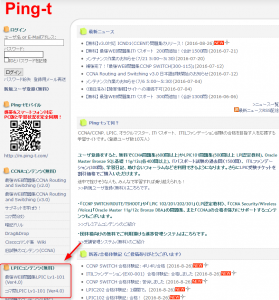
You start with a bronze medal, then it changes to silver after one correct answer, and to gold after consecutive correct answers.
By the time you get gold medals on all the questions, you should be familiar with the format.
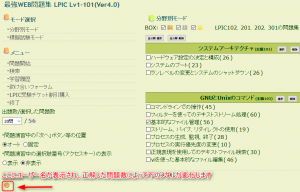
The study period was about five months, but I only spent about an hour and a half on it each day.
In my case, I spent more time inputting LPIC-related knowledge than solving practice problems.
102 Study Methods
After taking the 101 exam, you'll get the hang of it.
Ping-t charges a fee for questions from section 102 onwards, so you'll need to register for that beforehand.
I read through the textbook and then used Ping-t to get all the exam questions to the highest level.
Next, I aimed for a 70% correct score on all command-line questions across all areas.
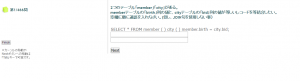
There were more command input questions than in level 101, and the content was more complex.
Conversely, mastering the command questions will boost your confidence.
The practice problems are also important, as similar problems to those written in them will appear on the exam.
I made sure to thoroughly read the explanations, especially for the ★★★ problems.
My study period was about two and a half months, and I studied for an average of three hours a day.
Since the exam date was set in advance, I was able to concentrate fully.
A little problem before the exam
To take the exam, you need accounts on the LPIC official website and with Pearson VUE (the exam delivery company).
Registering with Pearson VUE, in particular, was a bit time-consuming because it requires registration in both Japanese and English.
will need either a credit card or a special ticket to pay the exam fee.
It's best to complete the application process early to give yourself more time and peace of mind.
Conclusion
At first, I tried taking notes, but it wasn't very effective. I
found that reading texts and explanations was a much quicker way to memorize things than writing them down.
With practice, you'll be able to narrow down the answers to multiple-choice questions intuitively.
Maintaining motivation until the exam day is also crucial.
If you keep practicing repeatedly, you'll gradually understand things even if you don't understand them at all at first.
You need to score 500 out of 800 to pass the exam.
To put it extremely, since it's largely a matter of memorization, I think you could reach the passing range even if you only studied using Ping-t.
However, to truly understand the content, it's more reliable to use it in conjunction with a textbook.
I've come to realize that even if you pass an exam, you can't truly say you understand it unless you actually put that knowledge into practice as a skill. I
will continue to study so that I can utilize the knowledge I've worked so hard to acquire in my work.
I hope this can be of some help to those who will be taking the exam in the future.




The person who wrote this article
About the author