
Passed AWS Certified Solutions Architect Associate
table of contents
Hello everyone.
This is Hirata from the System Solutions Department.
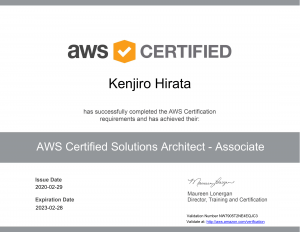
I recently passed the AWS Certified Solutions Architect Associate exam, so
I would like to summarize what I did to pass and my impressions of the exam.
About the Author
- Joined mid-career for 6 months (several years as an infrastructure engineer)
- No experience working with AWS before joining the company (only self-study)
Study period
2 months (January-February 2020)
I learned that the Solutions Architect Associate exam will be revised after March 23, 2020, so I started studying in a hurry.
https://aws.amazon.com/jp/certification/coming-soon/
Therefore, I took the SAA- C01 .
What I did
Exam preparation books
AWS Certification Exam Textbook AWS Certified Solutions Architect-Associate
https://www.amazon.co.jp/dp/B07R1H87Y1/
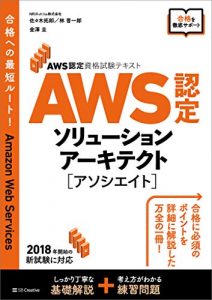 This is a good book to start with.
The content is easy to understand and the pace is quick, so after I finished reading it
I felt like I had a complete understanding of AWS, but that was just my imagination.
Cram AWS Certified Solutions Architect Associate Last Minute Preparation Text
https://www.amazon.co.jp/dp/4798059463/
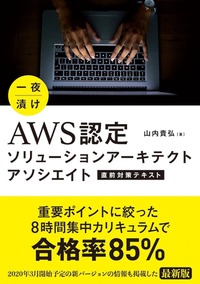 The chapter structure is unique, being organized by AWS Well Architected Framework rather than by service.
So, you might read about EC2, then Kinesis Data Streams, and
then EC2 again.
Perhaps for this reason, some Amazon reviewers have criticized the book, but
I think it's a good, practical book to read after the first one
WEB problem collection
Learn with AWS WEB practice questions
https://aws.koiwaclub.com/
It's a service similar to ping-t.
You can take over 935 SAA-C01 questions for a fee. The questions
7-question blocks , so you can work through them in your spare time.
Udemy AWS Certified Solutions Architect Associate Mock Exam Questions (5 Tests, 325 Questions)
https://www.udemy.com/course/aws-knan/
This is a mock exam with a similar structure to the actual exam, more difficult questions.
I started taking it two weeks before the exam, but I remember feeling hopeless after not passing a single question in the first week.
However, this was the most effective way to prepare for the exam.
What I didn't do
When you're working, you have limited time to study, so
you're forced to choose your study methods.
Here we will introduce a study method that is often introduced in online success stories, but which we did not
Udemy video lessons
Since I was tied up for a certain amount of time, it was difficult to study in my spare time, so I gave up
BlackBelt (Amazon online seminar)
https://aws.amazon.com/jp/aws-jp-introduction/I
decided not to go with this one because not all of them were specifically designed for the exam.
AWS official practice exam
I decided not to take the exam because I heard a lot of information that it was much easier than the actual exam
Impressions of the exam
Difficulty
Due to the restriction that the exam questions will not be made public,
I cannot go into details about the exam content, but
the difficulty level was on par with Udemy's mock exams.
The question text is long
The exam consists of 65 questions and takes 140 minutes.
Each question is roughly 150-250 characters long.
When I took the exam, there were only 40 minutes left at the end, so I had plenty of time, but I was
exhausted and mentally exhausted.
Sometimes it feels like you can't pinpoint the answer clearly
The exams are multiple choice, but there are times when you can't always pinpoint the answer and think, "This is definitely the answer.
" There are also times when you can do what you want, but wonder which one it is.
In such cases, the question usually
includes keywords such as "Which is the more cost-effective method?"
or
"High availability is required."
These are terms related to
the Well-Architected Framework which is a set of AWS design best practices consisting of the following five items:
* Operational Excellence
* Security
* Reliability
* Performance Efficiency
* Cost Optimization
If you're having trouble with an exam, choose the option that most closely resembles these best practices
That being said, there were still quite a few problems I couldn't figure out
for example,
S3 Storage Class
When I was asked to choose an S3 storage class, I was unsure whether to go with Standard or Standard-IA, but
the question didn't mention anything about cost or frequency.
Scheduled Reserved Instances
When choosing how to purchase an EC2 instance that will be launched for a certain period of time,
the notation for the period is slightly vague, and I can't decide on a Scheduled Reserved Instance...
SQS
Since application separation requires processing order and preventing duplication,
SQS FIFO would be able to meet the requirements, but FIFO is not listed as an option...
I think it's partly due to my lack of knowledge, but
, it might be better to just think of it as bad luck
Comparison with three years ago
There was a blog post from when one of our employees took the same exam three years ago
Apparently, there were no question books available at the time, so
the following study method was used.
- Try it out for yourself (attend official training)
- Take the official mock exam
- Read the official documentation
I was surprised at how different his study method was from mine.
It seemed like the only reference he had was official information.
Compared to back then, there are now more non-official reference books and question books available, and
I feel that AWS certification has become much more well-known in the industry in just three years.
Our company, Beyond, has many employees who hold AWS certifications and currently actively recruiting .
That's all
 0
0 Loading...0



The person who wrote this article
About the author