
[Essential for working adults!] Become a text communication master!
table of contents
Hello!
I'm Inoue, a Persian cat from Beyond Co., Ltd.'s Shikoku office.
I would like to write a blog about the ways I have devised for "text communication," which I believe has increased with the spread of telework. I
hope this will be helpful to many new graduates who have started working at IT companies.
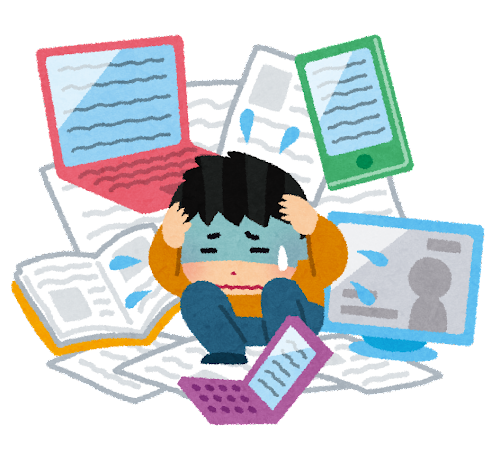
Common problems with text communication
- Mechanical and emotional (feels cold)
- The impression changes depending on the speed of the response
- If you choose polite words, your Japanese will sound strange
- I can't communicate what I want to say well
What I'm doing to overcome the problem
Mechanical and emotional (feels cold)
Our company uses Chatwork as its primary communication tool.
Chatwork has an emoji feature, so by including emojis somewhere in a sentence, I was able to eliminate this coldness.
I often use emojis when communicating with colleagues, such as "Thank you for your hard work."
The biggest benefit of using emojis is that they soften the tone of the sentence.
Text-only communication without emojis makes it difficult to see the other person's emotions, and they can come across as harsh or negative, even if it's not intended to be.
Of course, it's OK to use emojis when communicating with colleagues using Chatwork.
However, emojis can't be used when communicating with customers, right?
When communicating with customers, there are some things you can do to avoid sounding robotic or coming across as cold.
First, use the word "thank you" frequently.
There aren't many people who get annoyed when they hear "thank you," right?
"Thank you for contacting us"
"Thank you for checking quickly,"
is very important.
This is a technique that can be used with colleagues as well.
"Skill" may sound very shrewd, but I think it's good to make it a habit.
Whether it's a customer or a member of the company, when you feel someone is being considerate to you or when they take some kind of action,
be sure to say "thank you"!
In this sustainable age, wastefulness is considered bad, but please be sure to use the word "thank you" as much as you can!
The impression changes depending on the speed of the response
Have you ever thought about the speed of your responses when communicating via text? Have you
ever received a message from someone, thought you'd reply later because you were busy, and then forgot?
There's a saying, "Don't do it tomorrow, you idiot," but it's true that "don't do it later, you idiot." It's
true that during work, customers are your top priority, so it's easy to neglect replies to coworkers.
If
you're busy dealing with customers and can't respond to an internal message, try responding by saying something like, "I'm aware you've contacted me!"
It's better to give a clear time frame, such as "I'll check by a certain time," rather than just "later." The
thing that makes the other person anxious is not receiving a reply for a long time. It
makes them wonder, "I contacted you, but did you even see it?"
The faster the response, the better.
In addition, showing consideration for the other person will be an advantage in your text communication skills.
If you choose polite words, your Japanese will sound strange
Isn't this a common problem when communicating via text?
For example, the sentence, "We're contacting you to let you know that XX has completed the work."
At first glance, it seems like a polite sentence.
What I find strange is the phrase "XX is."
Since it's clear that the work "XX" has been completed, using "XX is" is incorrect when there's nothing to compare it to.
Another issue is the use of the honorific "will do" twice in one sentence.
The sentence is "We have completed ~, so we will do ~."
So, to make the sentence "We're contacting you to let you know that XX has completed the work" sound less strange
"XX has been completed. Could you please confirm?"
or "We're contacting you to let you know that XX has been
completed."
I can't communicate what I want to say well
If you are having trouble getting your point across, it's important to keep in mind the "6W3H."
- what⇒what
- why⇒why
- when⇒when
- who⇒who
- whom⇒who
- where⇒where
- how to⇒how
- how much⇒how much, how many
- how many⇒how many
By incorporating this into your writing, you can clarify what you want to communicate and prevent missed communications.
Also, since you can communicate what you want to say in one message, you reduce the number of chat messages you need to send, improving work efficiency for both parties. One
thing to be careful of here is not to make sentences too long.
Being too conscious of the "6W3H" can lead to long sentences.
Break sentences at appropriate points to prevent them from becoming too long and difficult to understand.
I also try to keep my sentences as short as possible when writing blogs or communicating via text.
I'm not a very good writer, so if I make a sentence too long,
the other person won't understand what I'm trying to say (lol). It can also lead to losing track of what I was trying to say, so it's a good idea to be conscious of breaking sentences up into shorter segments, both for your own sake and the other person's.
The difference between chat and email
What's the difference between chat and email?
Both are convenient tools for communicating with customers.
However, I feel there's one big difference between chat and email:
their convenience
Chat offers quick responses and allows for short, easy exchanges.
Even if you make a typing error, you can correct it later by "editing.
You can share chat content with multiple people and chat with multiple people.
When you need a quick response, chat is overwhelmingly more convenient.
On the other hand, email tends to be more formal and stiff.
Even if you make a typing or operational error, you can't correct it by "editing."
Therefore, be sure to carefully check your message for any issues before hitting the send button!
Unlike chat, email is primarily for one-on-one communication.
Email is often used for polite exchanges or for first-time communication.
Unlike chat, conversations don't flow quickly, so emails are convenient in that you can reread them.
Other things to be aware of in business situations
As an engineer, when communicating with customers, it's important to avoid
excessive use of katakana, abbreviations, and technical jargon.
It's unkind to assume the other person understands the same things you already understand.
For example
, "The XX work is on schedule" would mean
"The XX work is progressing according to schedule and there are no problems."
"We will assign an engineer from our company to the XX meeting. The agenda is as follows." would mean
"An engineer from our company will also be attending the XX meeting. The meeting agenda is as follows."
Working
in an IT company, it's easy to use technical jargon, but
avoid using it too much, as it can confuse the other person. It
's a good idea to have a correct understanding of technical terminology and be able to communicate in Japanese so that you can use phrases that are understandable to everyone.

Finally
Those new to text communication will inevitably encounter problems.
I too have struggled with many problems related to text communication.
In summary, "text communication" is about respect and consideration for the other person.
As a member of society and an engineer, text communication is essential, so I hope this article will be helpful to you. I
also like to encourage veteran members of society to think about ways to improve their text communication.
I will always keep in mind what I have written in this blog so that unintended content or emotions are not conveyed to the other person.
Growing every day, progressing every day.
I have to update myself every day!!!
Thank you for reading to the end.
 3
3 Loading...3



The person who wrote this article
About the author