
[Essential for working adults!] Become a text communication master!
Hello!
I'm Inoue, the Persian cat at Beyond Shikoku office.
I'd like to share some of the things I've learned about "text communication," which I think has increased with the rise of teleworking, in this blog post.
I think there are many new graduates who have just started working at IT companies, so I hope this will be helpful.
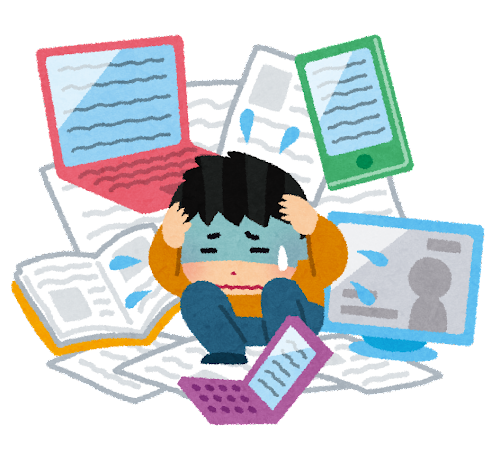
Common problems with text communication
- Mechanical and emotional (feels cold)
- The impression changes depending on the speed of the response
- If you choose polite words, your Japanese will sound strange
- I can't communicate what I want to say well
What I'm doing to overcome the problem
Mechanical and emotional (feels cold)
At our company, we primarily use ChatWork as our communication tool.
ChatWork has an emoji function, and by including emojis somewhere in a sentence, we were able to eliminate the abruptness.
I often use emojis when I say "Good work" to my colleagues.
The biggest effect I feel from using emojis is that they make the writing softer.
When communicating only with text without emojis, it's difficult to see the other person's emotions, and it's easy to come across as harsh or negative, even if that wasn't the intention.
Of course, it's OK to use emojis when contacting colleagues using ChatWork.
However, you can't use emojis when contacting customers, right?
When contacting customers, there are things you can do to avoid sounding mechanical or giving a cold impression.
First, use the word "thank you" frequently.
There are hardly any people who feel bad when they are thanked, right?
It's very important to say "thank you" for the actions that customers have taken, such as
"Thank you for contacting us"
"Thank you for checking so quickly."
This is a technique that can also be used with colleagues.
The word "technique" might sound a bit cunning, but I think it's good to make it a habit.
Regardless of whether it's a customer or a colleague, when you feel someone has shown you consideration or taken some kind of action,
be sure to say "thank you"!
In this sustainable age, wasteful spending is considered bad, but when it comes to the word "thank you," feel free to use it to your heart's content!
The impression changes depending on the speed of the response
Have you ever considered the speed of your responses in text communication? Have
you ever received a message, thought "I'll reply later because I'm busy," and then forgotten?
There's a saying, "Putting things off until tomorrow is for fools," but "Putting things off until later is for fools."
It's true that during work hours, customers come first, so replies to colleagues tend to get neglected.
When you're swamped with customer service and can't reply to internal messages right away,
"Let me check it later,"
to let the other person know that you've received their message!
It's even better if you specify a time, such as "I'll check it by [time]." The most
worrying thing for the other person is when they never receive a reply
They start to wonder, "I sent a message, but are they even looking at it?"
The sooner the response
, the better. Adding consideration for the other person makes your text communication skills even stronger.
If you choose polite words, your Japanese will sound strange
Isn't this a common pitfall in text-based communication?
For example, consider the sentence, "I am contacting you because the task of XX has been completed."
At first glance, it seems like a polite sentence.
What I find awkward is the phrase "the person who completed XX."
Since it's clear that the task of XX has been completed, using "the person who completed XX" is incorrect when there's nothing to compare it to.
Also, the honorific "itashimasu" is used twice in one sentence.
It's like saying, "I have done so, so I will do so."
So, to make the sentence "I am contacting you because the task of XX has been completed" sound like awkward Japanese, it's better to
split it into two sentences or change the wording, such as
"XX has been completed. Could you please confirm?"
or "XX has been completed, so I would like to report it to you."
I can't communicate what I want to say well
If you are having trouble getting your point across, it's important to keep in mind the "6W3H."
- what⇒what
- why⇒why
- when⇒when
- who⇒who
- whom⇒who
- where⇒where
- how to⇒how
- how much⇒how much, how many
- how many⇒how many
Incorporating this into your writing clarifies what you want to convey and prevents missed communications.
Furthermore, since you can communicate your message in a single message, you reduce the number of chat messages you need to send, making both parties' work more efficient.
However, one thing to be careful about is not making sentences too long.
Focusing too much on the "6W3H" framework can easily lead to overly long sentences.
Break up sentences at appropriate points to prevent them from becoming too long and difficult to understand.
When I write blog posts or text messages, I also try to keep my sentences as short as possible.
Because I'm not a great writer, if my sentences are too long, my message doesn't get across (laughs).
Even I sometimes forget what I wanted to convey, so it's good to consciously keep sentences short for both your and the other person's sake.

The difference between chat and email
What are the differences between chat and email?
Both are convenient tools for communicating with customers.
However, I feel there is a big difference between chat and email.
That is "ease of use"!
Chat allows for quick responses and easy exchange of short messages.
Also, even if there are typing errors, they can be corrected later with "editing."
You can share chat content with multiple people and have group chats.
When you need a quick response, chat is overwhelmingly more convenient.
On the other hand, email tends to be formal and stiff writing.
Even if there are typing errors or operational mistakes, they cannot be corrected with "editing."
Therefore, be sure to check that there are no problems with the text before pressing the send button!
Also, unlike chat, email is basically a one-on-one exchange.
Email is often used for polite exchanges and initial introductions.
Also, since the exchange does not get lost in the chat like it does, email is convenient in the sense that you can reread it.
Other things to be aware of in business situations
As an engineer, when contacting clients, it
's important to avoid overusing katakana, abbreviations, and technical jargon.
It's inconsiderate to assume that the other person understands the same terms you do. For example, instead
of
saying "The work on XX is on schedule,"
say "The work on XX is progressing according to schedule and there are no problems."
"We will assign one of our engineers to the meeting on XX. The agenda is as follows," you
say "An engineer from our company will also attend the meeting on XX. The agenda for the meeting is as follows."
Working
at an IT company, it's easy to fall into the habit of using technical jargon, but
avoid using it too much, as it can confuse the other party!
To be able to communicate in a way that anyone can understand, it's best to have a correct understanding of technical terms and be able to explain them in Japanese.

Finally
Those new to text communication will inevitably encounter difficulties.
I, too, have struggled with numerous text communication issues.
In short, "text communication" is about respect and consideration for the other person.
As a working professional and an engineer, text communication is essential, so I hope this will be helpful to everyone. I
also encourage veteran professionals to take some time to consider how they can improve their text communication.
I will always keep in mind what I've written in this blog to avoid conveying unintended content or emotions to the other person.
Growing every day, moving forward every day.
I must update myself every single day!!!
Thank you for reading to the end.




The person who wrote this article
About the author