

Get detailed process information on a Windows machine [tasklist command]

Hello.
the Buffer Overflow
System Solutions Department, and I'm here for an all-you-can-eat meal.
It's the end of the year. Wow, it was hot this year.
Next year, I hope to experience the changing seasons a bit more in my daily life.
Now, as the end of the year approaches and many of you get busier,
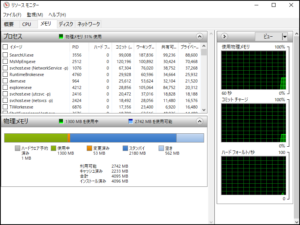
how do you all check the process status on your Windows machines? If you just want a quick overview, you probably use Task Manager or Resource Monitor.
However, while those are visually easy to understand, sometimes you want to see more detailed information, like in Linux, right?
⇩Task Manager⇩Resource
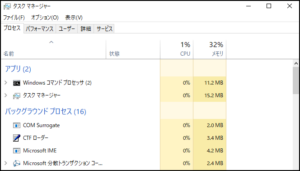
Monitor
That's where the " tasklist " command comes in handy . It offers options to display additional information and
output in CSV format, making it very versatile. This article will introduce this command.
(This article uses Windows Server 2019, but the behavior is the same on Windows 10 and 11.)
Example of using the tasklist command
To start, open the command prompt and type the "tasklist" command without thinking
tasklist
The process list will then be displayed as shown below.
See the official documentation here .)
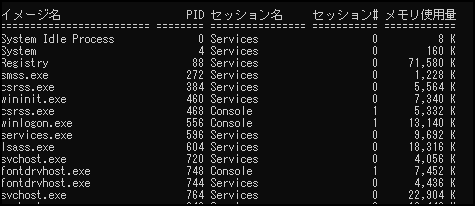
By default, only five items are displayed: "Image Name," "PID," "Session Name," "Session," and "Memory Usage."
If you want to output more detailed information, you will need to add an option. Help can be viewed below.
tasklist /?
View Details
Just add /v to get various information
tasklist /v
Memory, status, and execution time are also clearly visible

Show processes using more than 100MB of memory
This is useful when you want to quickly identify processes that are using a lot of memory
tasklist /fi "memusage gt 100000"

Process output in CSV format
You can also output data separated by commas. You can also specify TABLE (default) or LIST
tasklist /v /fo csv
⇩⇩⇩It's hard to read as is,

⇩⇩⇩but if you paste it directly into a spreadsheet, you can check it like this, and sorting is also done nicely, which is convenient.

Search by module name
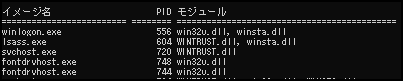
For example, pressing ⇩ will display processes for modules that start with "win*"
tasklist /m win*
In summary, using these methods
should allow you to identify processes with high memory usage and conduct a detailed investigation into which processes are running.
Please give them a try.
complete




The person who wrote this article
About the author