

[Features] Overview of the new generation CPU "AMD EPYC" for cloud/servers [Semiconductors]
This is Ohara from the Technical Sales Department
describes the features of
AMD (Advanced Micro Devices) , the CPU used in cloud computing platforms like AWS and GCP (Information current as of September 2021.)
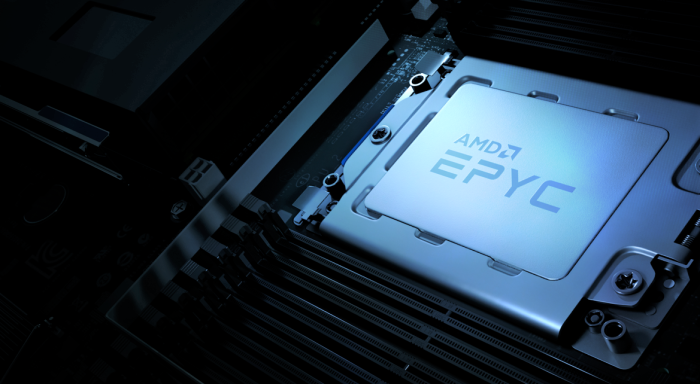
AMD EPYC Overview
● The world's highest performance x86 CPU
● Improved performance with the latest "Zen3" core
● AMD EPYC™ 7003 PROCESSORS (development codename "MILAN")
● Drop-in compatibility for use with the Rome platform (BIOS update required)
● Enhanced security features
● Support for 4ch/6ch/8ch channel memory
● Improved memory performance (maximum x86 L3 cache of 32MB per core)
Characteristics of each cloud
| Cloud Name | Features | overview | Main target instances |
| ● AWS | - Pricing up to 10%-45% lower than comparable EC2 instances. - Seamless workload migration and flexibility. |
EC2 G4ad instances feature AMD Radeon Pro V520 GPUs and 2nd Generation AMD Epyc processors. Up to 45% lower cost than Nvidia G4dn instances for graphics-intensive applications like virtual workstations, game streaming, and graphics rendering. |
・M5a/M5ad (General-purpose) , ・R5a/R5ad (Memory-optimized) , ・T3a (Burstable General-purpose) , ・C5a (Compute-optimized) , ・G4ad (Graphics-intensive) , ・3rd-generation EPYC core Amazon EC2 instances * Coming soon |
| ● Microsoft Azure | Supports a wide range of applications and workloads. Up to 80K cores with HBv2 for HPC in the cloud. |
Azure D32as v4 virtual machines powered by 2nd Generation AMDEPYC processors are up to 53% less expensive than Azure D32ds v4 | Dav4 (general purpose) , Eav4 (memory optimized) , HBv2 (HPC optimized) , HBv3 (HPC optimized) * Coming soon , Lsv2 (storage optimized) , NVv4 (GPU + CPU optimized) |
| ● Google Cloud | AMD-based N2D instances deliver up to 13% savings compared to comparable Intel N-series instances, and up to 39% performance improvement on Coremark benchmarks compared to comparable Intel N1 instances. |
AMD-based N2D VMs offer improved performance for data management workloads that leverage AMD's higher memory bandwidth and higher per-system throughput (available in larger VM choices), with up to 224 vCPUs, making them the largest general-purpose VMs at Google. Benchmarks show 20-30% performance gains across many workload types, with up to 2.5x improvements in benchmarks that benefit from AMD N2D's improved memory bandwidth, such as STREAM. |
N2D Standard (general-purpose) , N2D HighMEM (memory-optimized) , N2D HighCPU (HPC-optimized) , Confidential VMs , N2D Milan (coming soon) , C2D for HPC (coming soon) , Tau T2D (coming soon) |
| ● Oracle Cloud | - | - | ・E2 Standard (general purpose) ・E3 Standard (high performance) ・Elastic Block Storage V2 ・Standard E4 Flex Sizing (general purpose) *Coming soon |
| ● Alibaba Cloud | - | - | ・g6a (general purpose) ・c6a (computing optimized) ・r6a (memory optimized) |
Reference materials
● AWS: AMD EPYC™ & AWS EC2 instances
● Microsoft Azure: AMD EPYC™ & Microsoft Azure Virtual Machines
● Google Cloud: AMD EPYC™ & Google Cloud Platform instances
summary
Recently, AMD CPU instances have been released for the cloud, so when you are developing services/content on the cloud, why not consider them as an option depending on the specifications of the applications that will run on the cloud?
 0
0 Loading...0



The person who wrote this article
About the author