

【*#06#】How to check if your device supports eSIM/dual SIM

This is a story about the mysterious number "*#06#" that allows you to easily check if your device supports eSIM or dual SIM
It may seem a little suspicious, like some kind of password, but it's not like that at all; it's a very useful number, so I hope everyone will make use of it
There are also several other related articles about eSIMs, so please take a look at them along with this article
[Observation] There are many smartphones in Japan that do not support dual SIM or eSIM
〇【eSIM】Smartphone SIM lock and how to unlock it
〇 [eSIM] APN Settings Explained ~ iOS Edition ~
〇【eSIM】Setup method ~ iOS version ~
What is this number anyway?
First of all, regarding this number, "*#06#" is used to display the "IMEI (International Mobile Equipment Identity) number."
While you can also check this information from the settings screen of your device, you can easily obtain the IMEI information by simply opening the phone app on your smartphone and entering *#06#
By the way, IMEI is a globally recognized management number for devices, and is assigned a "unique individual number (15-16 digits)"
This unique number allows you to determine the device's manufacturer, country of origin, serial number, etc. For example, when unlocking the SIM lock, you provide your device's IMEI number to your carrier
The carrier will then use the IMEI number to identify the user's device and proceed with the official SIM unlock procedure
How to check if your phone supports eSIM/dual SIM
Now we get to the main topic, and I will explain it using actual screenshots
Open the phone app on your device and enter *#06# on the keypad
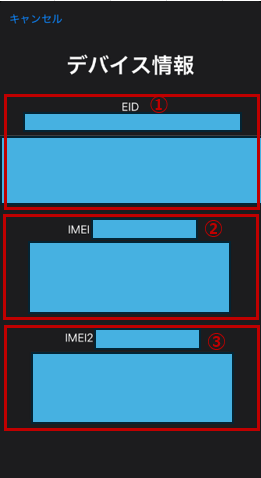
iPhone sample screen
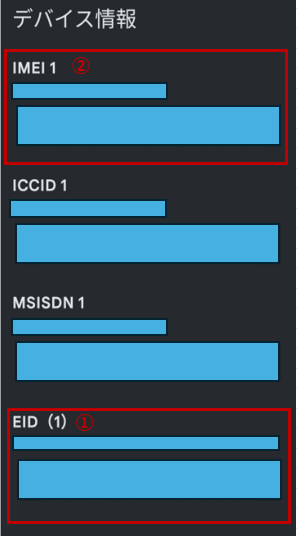
Android sample screen
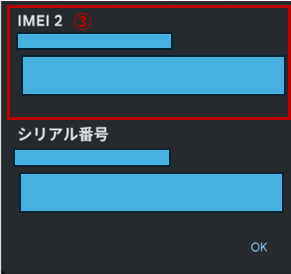
Explanation of each information
① EID
This is called the Embedded Identity Document and it displays information about the eSIM
② IMEI
The information about the IMEI that was opened earlier is output
The information in this section is for the first SIM card slot
When unlocking the SIM lock, etc., you only need to provide this first piece of information
③ IMEI 2
Similarly, information about the IMEI is output
The information in this section is for the second SIM card slot
What can you determine from this information?
Regardless of whether you are using an iPhone or Android, you will probably see a screen similar to the one above, but by sorting through the contents, you can determine the device information as shown below
① "The EID, which is the eSIM identifier, is displayed" → It is highly likely that eSIM can be used on your device
③ "The second IMEI information is displayed" → This indicates that two SIM slots are recognized,making it highly likely that dual SIM functionality is available.
summary
What did you think?
There were a lot of foreign words and alphabets, so it may have been a little confusing, but I've summarized the content below
- Open the phone app on your device and type *#06#.
- If the EID is displayed on the screen , there is a high probability that you can use the eSIM
- If IMEI 2 is displayed on the screen , there is a high probability that dual SIM functionality is available
As I mentioned briefly at the beginning, of course, you can manually check this information from the settings screen on any smartphone operating system
However, I personally find the easiest and most straightforward method to display this number, and it can be checked in the same way regardless of the smartphone's operating system
This is extremely convenient, and especially on Android, where the settings screen itself is different for each model, it's a simpler way to check
However, it's important to note that"the information you can obtain through the above procedureonly for reference purposes.
To more accurately verify the device's specifications, be sure to check with the smartphone's vendor (manufacturer or carrier) before purchasing an eSIM or using dual SIM functionality




The person who wrote this article
About the author