Studying for exams
What I used for learning
There are many reference books and study sites for LPIC, but I studied using the following two
- Linux Textbook LPIC Level 1 Version 5.0 Compatible (commonly known as Azukihon) [Approx. 4,000 yen]
- Ping-t (learning site) URL → https://mondai.ping-t.com/g
There are many reference books available, but personally, I felt that if I thoroughly understood the contents of the book above, I would definitely pass. LPIC Level 1 includes two exams, LPIC101 and LPIC102, and the book above covers both areas. It's a good deal
If you are aiming for a more reliable pass or are unsure about the accuracy of one book, it may be a good idea to use other books. This is a matter of personal preference
The learning site Ping-t allows you to solve two types of questions: multiple choice questions and fill-in-the-blank questions called Komamon. It's free for LPIC 101 questions, so it's easy to use
There are a large number of questions and each question is of high quality, so using it as a mock test or to check that you have retained your knowledge can have an extremely effective learning effect, so we strongly recommend using it when studying
study method
For both LPIC 101 and LPIC 102, I studied in the following order:
- Read the Azuki book once (you don't need to fully understand the contents at this point)
- Read the Azuki book one more time (skip the parts you vaguely understood the first time around, and read the parts you didn't quite understand a bit more carefully)
- Solve random questions on Ping-t until you can get about 70-90% right
- Just review
As for my study cycle, I would basically study for about 30 to 60 minutes on the train commute to and from work on work days, and on top of that, on days when I had some free time, I would do some light studying before going to bed
When I wasn't motivated, I would play games or surf the internet instead of forcing myself to study. Studying out of obligation not only makes it hard to remember things, but it also causes stress, so don't force yourself
There are various opinions regarding the amount of study time required, but it seems that you should be fine with about 30 to 50 hours for each of 101 and 102
Application for the exam
Let me start by saying that it takes a lot of work
Get your LPI-ID on the LPI official website
First, go to the official LPI website (
https://www.lpi.org/ja/japan/ ), click on "Get an LPI-ID" in the top right corner, and follow the instructions to register. The LPI-ID you obtain here will be needed in later steps.
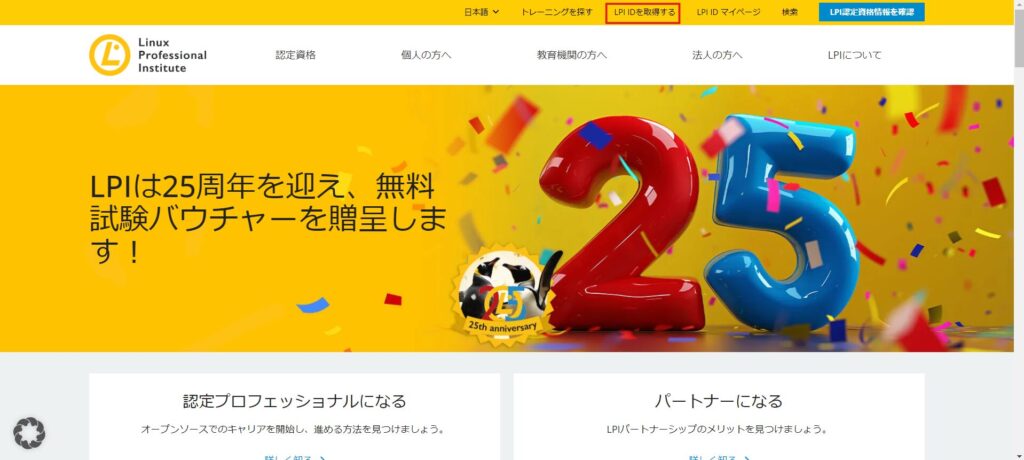
Please make sure to write down the LPI-ID you are issued somewhere so you don't forget it
Create a Pearson VUE account
Reservations for the LPIC exam are not made through the LPI official website, but through a separate site called Pearson VUE
However, to make a reservation, you will need to create an account with Pearson VUE, which requires the LPI-ID you created earlier
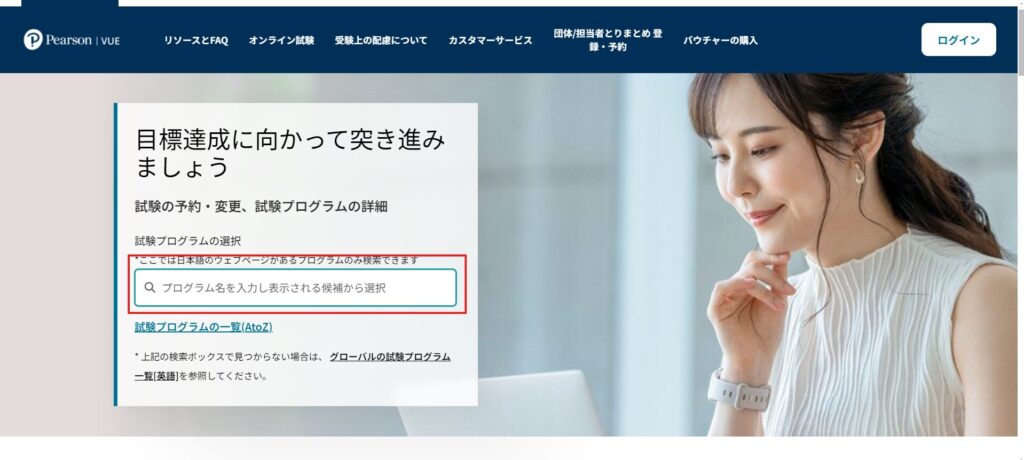
When you move, you will see a screen like the one below, so enter "LPI" in the red box
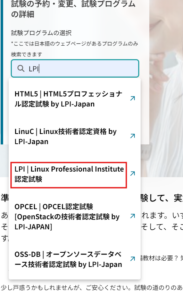
A drop-down menu will appear as shown below, so click on "LPI | Linux Professional Institute Certification Exam."
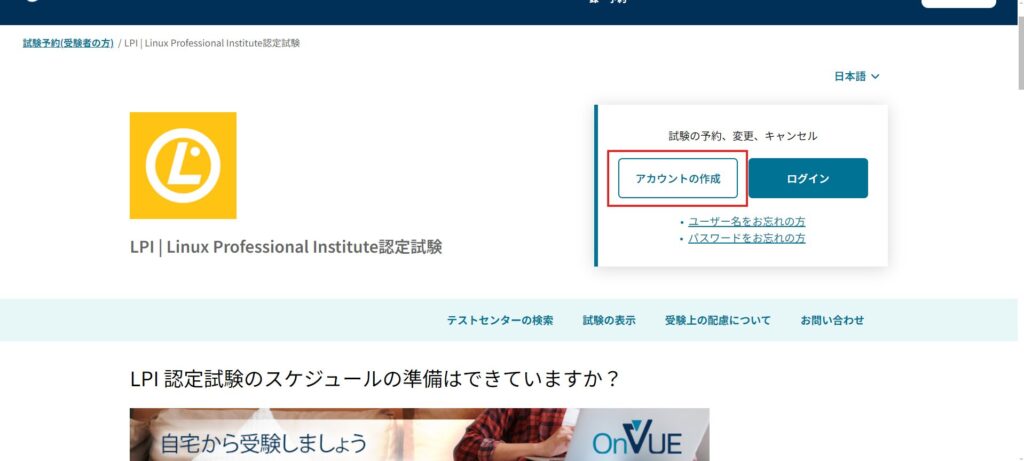
Next, you will be redirected to the following screen, where you can enter the settings from "Create an account" (we will not go into detail here)
Once you've created your account, you're almost there—it's time to schedule your exam!
Schedule your exam
There are two ways to take the exam: at home or at a venue such as a test center. Here we will assume you will be taking the exam at a venue (taking the exam at home has very strict environmental requirements, so it is not recommended for first-time applicants)
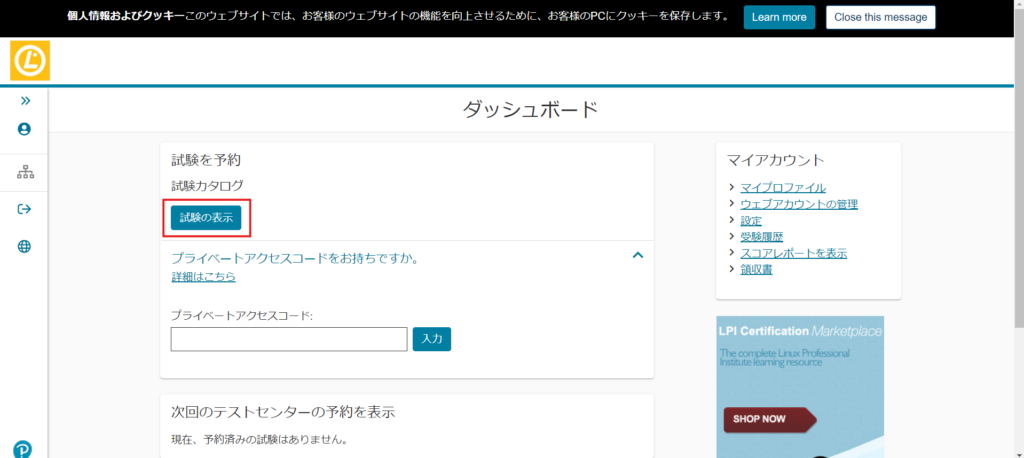
If you are logged in, you will see the following screen:
Please proceed by clicking the "Schedule an exam" button
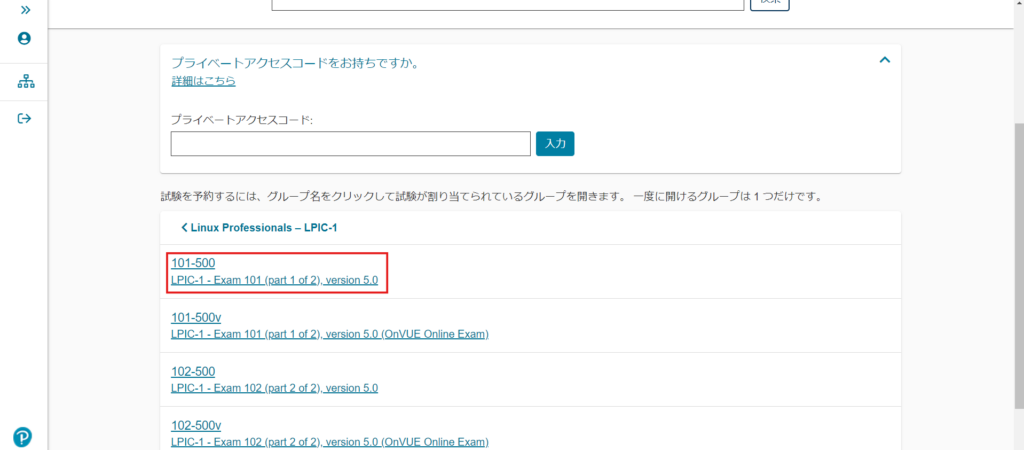
You will be taken to the exam selection screen. If you are taking LPIC 101, select "LPIC-1 - Exam 101 (part 1 of 2), version 5.0."
After this, you will be asked to select the language and exam location you would like to use during the exam
As long as there are seats available, you can make a reservation even the day before, so decide on the test date based on your own convenience
Once you have completed the payment, your exam reservation is complete. Thank you for your hard work!
Until the day of the exam
What you need to bring
Even if your reservation goes smoothly, it would be pointless if you forget something and are unable to take the exam. Make sure you have enough time to prepare
Basically, you only need the following two items. There are several other combinations, so please check here
- Photo ID (driver's license or My Number card)
- Health insurance card
In my case, my driver's license and health insurance card were sufficient
On the day of the exam
If there are no problems with your belongings, it's time for the actual exam
When you arrive at the venue, you will be given a form to fill out, have your ID checked,
and then you will be guided to your seat to take the test.
Please note that you are not allowed to bring anything into the examination venue, including the contents of your pockets. If you would like to bring a handkerchief or tissue, please inform the staff at the counter
Once you're seated, follow the on-screen instructions to begin the exam. All you have to do is put everything you've learned into practice. Good luck!
Once the test is over, you will be given your score and pass/fail result on the spot. There's no time to bask in the afterglow.
Once you've checked your score, follow the instructions on the screen and leave immediately.
Conclusion
Knowledge of Linux and networking is a field that will never go bad if you want to live as an engineer. The knowledge you gain in the process of obtaining LPIC Level 1 will surely be useful in your future engineering career
In fact, I am always helped by the knowledge I have acquired in my work
If you want to acquire knowledge about infrastructure or want to make sure that your knowledge is solid, why not take the exam?
If you found this article useful, please click [Like]!
 13
13
Loading...